
In a world that often demands perfection, speed, and constant consumption, our homes should feel like the antidote. If you find yourself craving a space that doesn’t just look beautiful, but actually feels like a deep, restorative breath at the end of a long day, you are ready to embrace the art of Wabi-Sabi interior design.
More than a decorating trend, Wabi-Sabi is a Japanese philosophy that finds beauty in imperfection, impermanence, and incompleteness. It is the perfect approach to transform your bedroom into a true sanctuary of serenity and mindful living.
Wabi-Sabi vs. Japandi: Understanding the Difference
You may have heard “Wabi-Sabi” and “Japandi” used interchangeably, but they are not the same.
Japandi design is a structured blend of Japanese minimalism and Scandinavian functionality. It is clean, intentional, and focused on practical, modern living with a minimalist aesthetic.
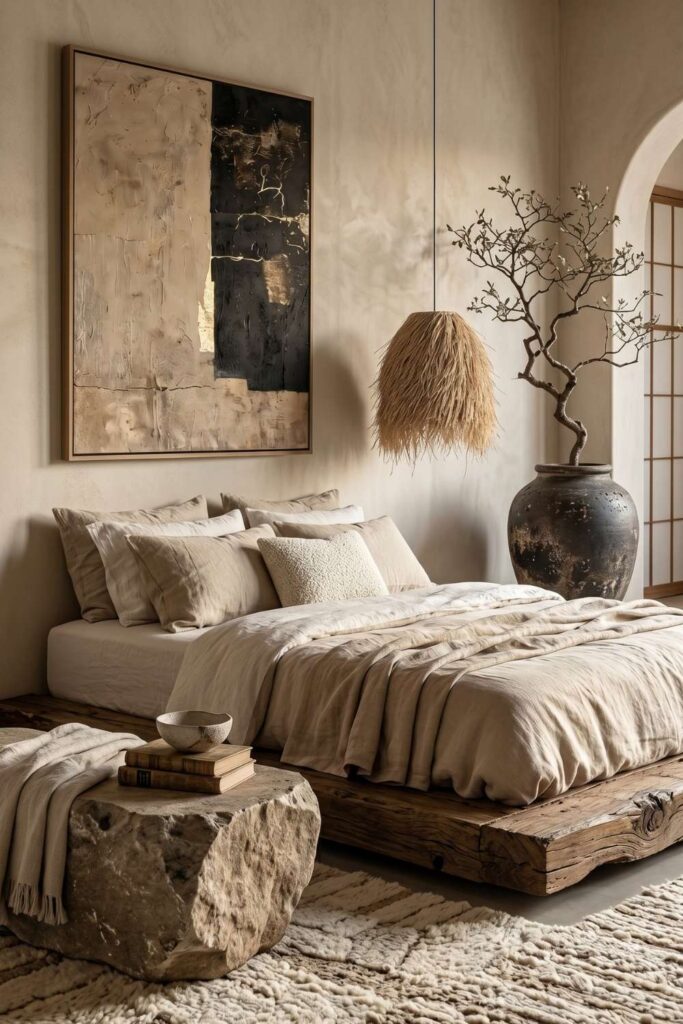
Wabi-Sabi, on the other hand, is more of a philosophy than a style. While Japandi focuses on structure and function, Wabi-Sabi focuses on feeling. It embraces natural aging, raw materials, and the quiet beauty of “perfect imperfection.”
A Japandi bedroom often feels curated and refined, while a Wabi-Sabi bedroom feels warm, lived-in, and deeply personal.
The Core Principles of a Wabi-Sabi Bedroom
To create a Wabi-Sabi inspired bedroom, focus on these three foundational principles:
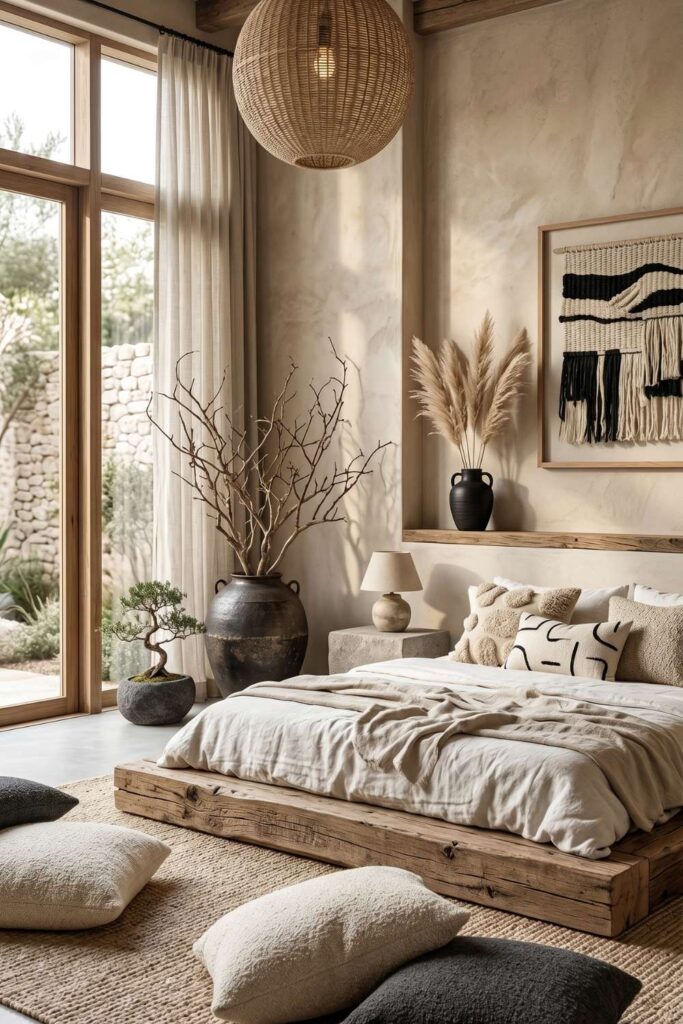
1. Nature as the Focal Point
Bring in materials that feel organic, raw, and timeless:
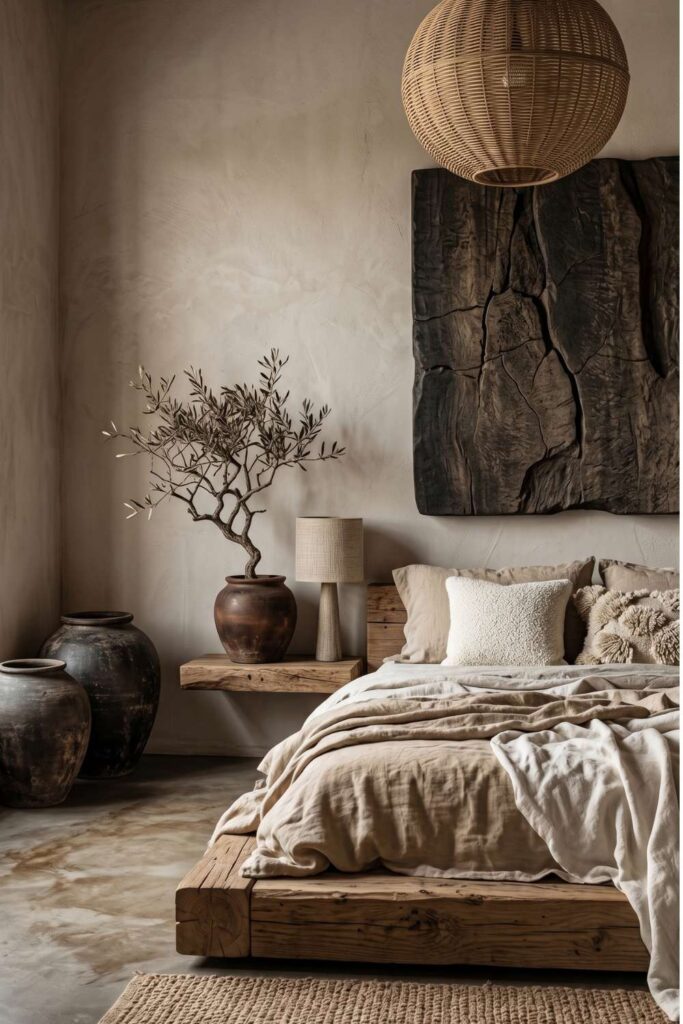
- Natural wood with visible grain
- Handwoven textiles
- Stone, clay, and linen
- Unfinished or minimally processed materials
These elements create a grounded, calming atmosphere rooted in nature.
2. An Earthy, Muted Color Palette
Your color palette should reflect the natural world. Choose:
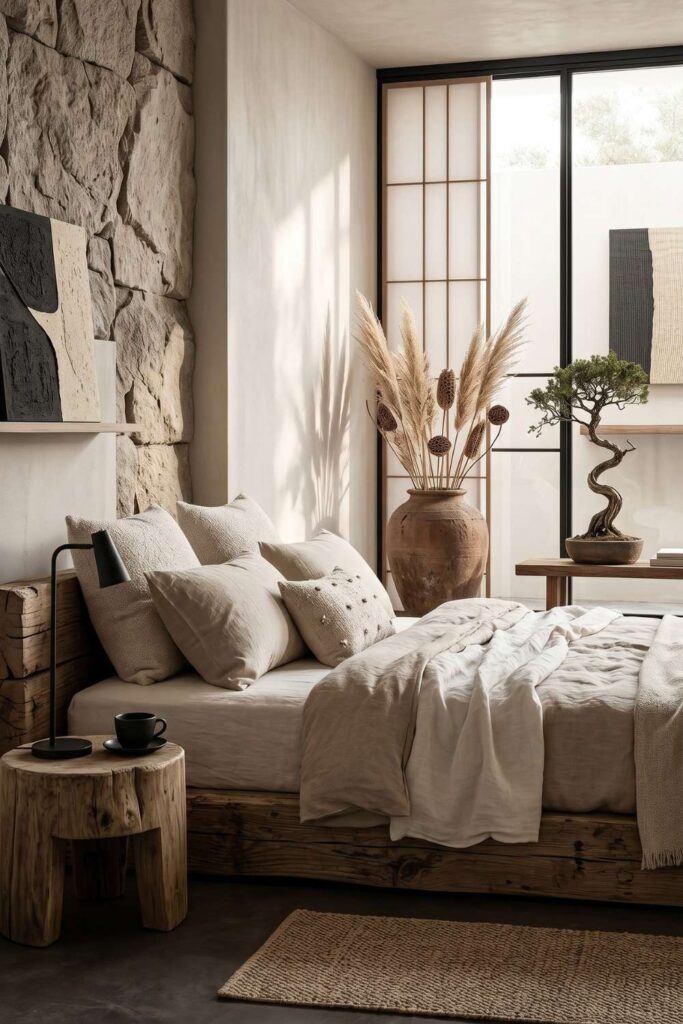
- Soft beige and sand tones
- Warm taupe and muted greys
- Terracotta and clay hues
- Deep charcoal or earthy browns
These tones naturally promote relaxation and signal the brain to slow down.
3. Curate, Don’t Collect
Wabi-Sabi is minimalist, but never sterile. Every object should feel intentional.
Keep only items that:
- Serve a quiet function
- Hold personal meaning
- Contribute to a sense of calm and grounding
Negative space is just as important as objects.
How to Create a Wabi-Sabi Bedroom (Step-by-Step)
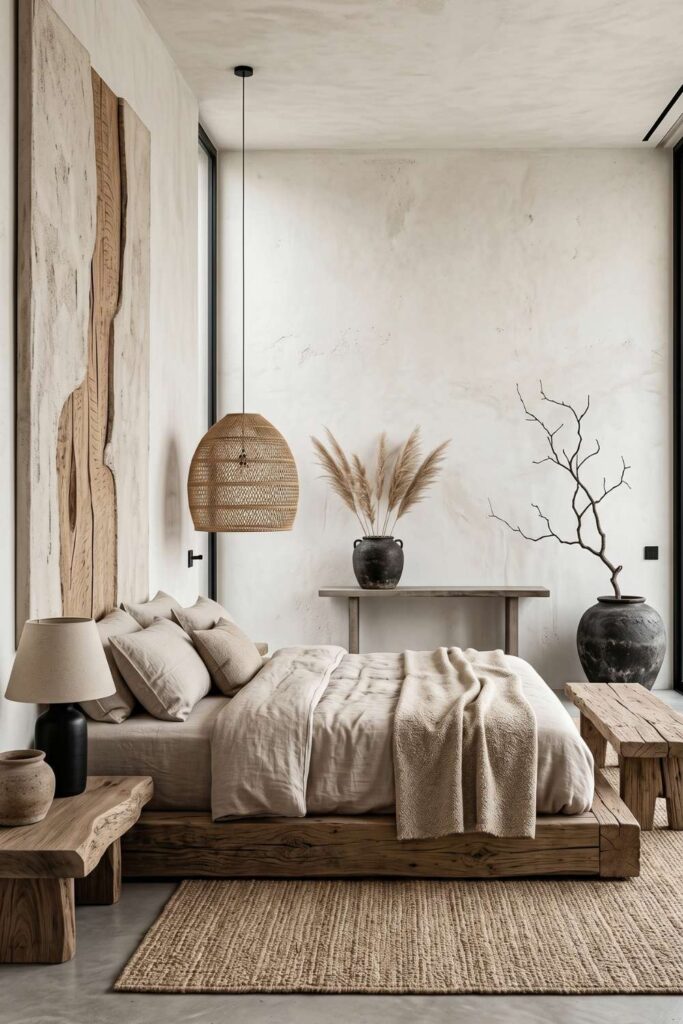
Start with Natural Textiles
Your bed is the heart of the room. Choose:
- Stonewashed or organic linen bedding
- Soft, slightly wrinkled textures (wrinkles are part of the beauty)
- Neutral, earthy tones
The goal is comfort, not perfection.
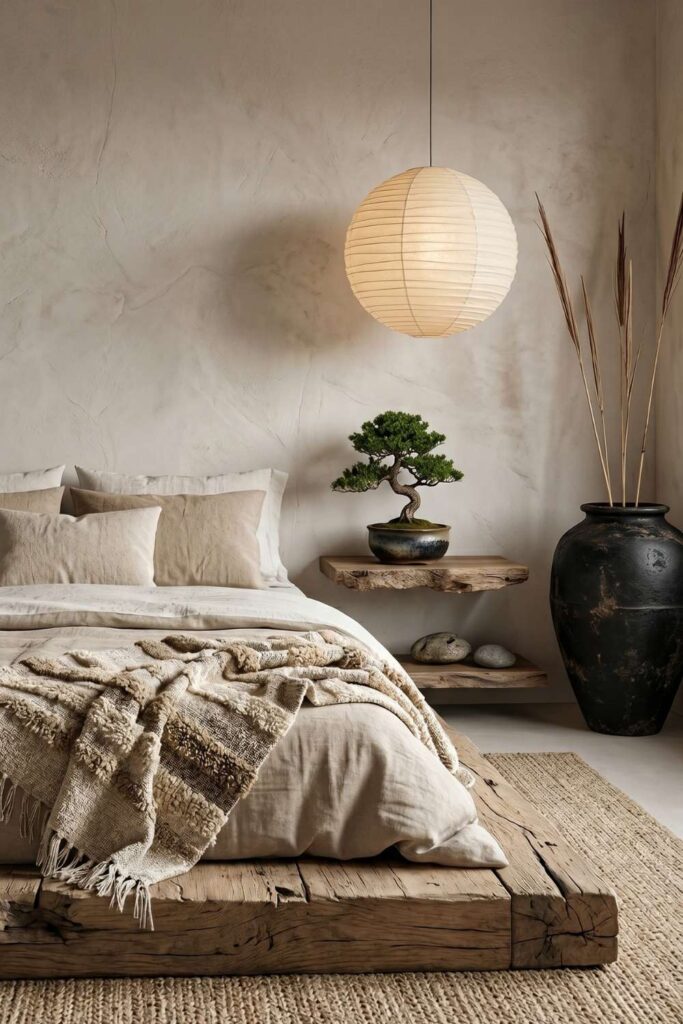
Use Soft, Layered Lighting
Avoid harsh overhead lighting. Instead:
- Use warm table lamps
- Paper or fabric lampshades
- Soft ambient lighting at multiple levels
Think of lighting that mimics golden hour or sunset glow.
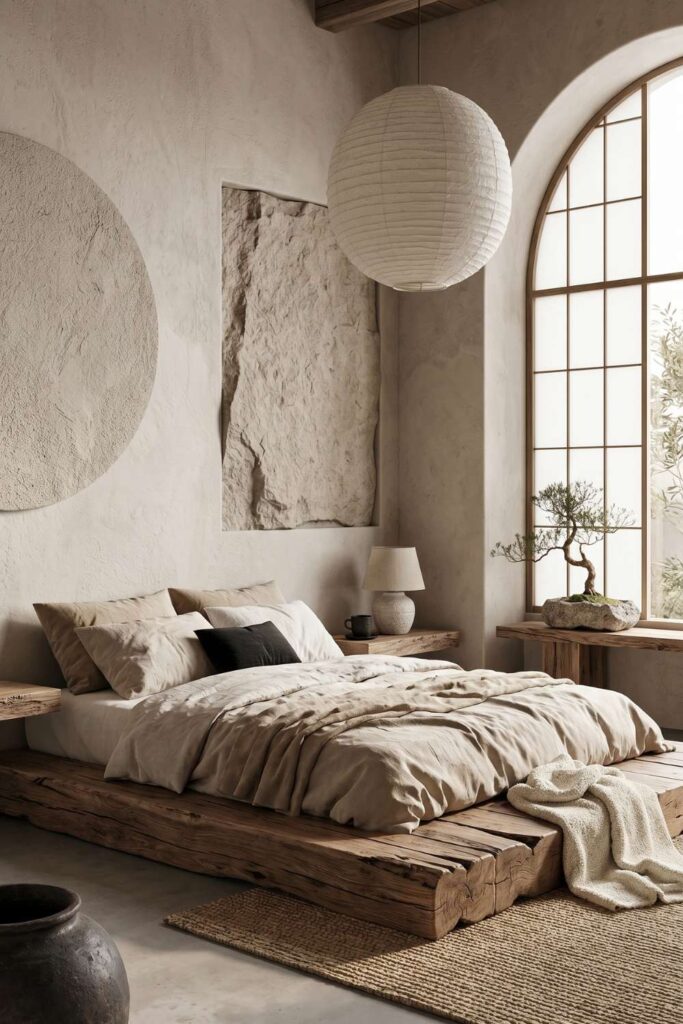
Add Nature-Inspired Decor
Introduce elements that reflect time and nature:
- A weathered ceramic vase
- Driftwood or sculptural branches
- Smooth stones or natural objects collected outdoors
- A single, simple plant (olive tree, bonsai, or wild grasses)
Wabi-Sabi Bedroom Ideas on a Budget
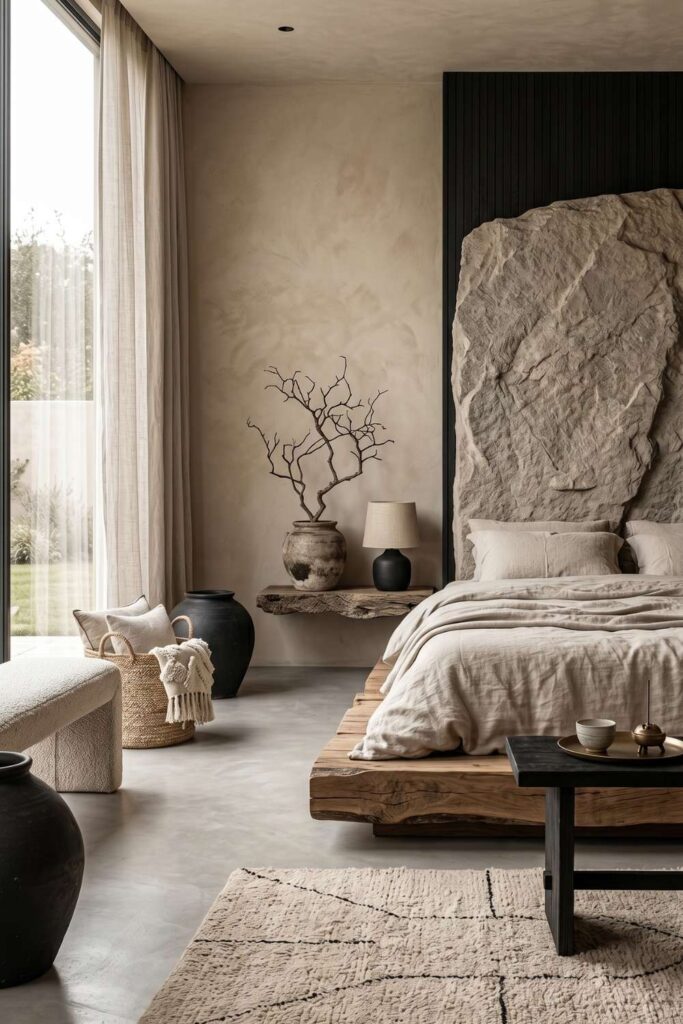
You don’t need a luxury budget to create a serene Wabi-Sabi space. In fact, this philosophy embraces simplicity and resourcefulness.
Adopt a DIY Mindset
Reimagine secondhand or imperfect items:
A scratched wooden stool isn’t damaged—it is full of character and history.
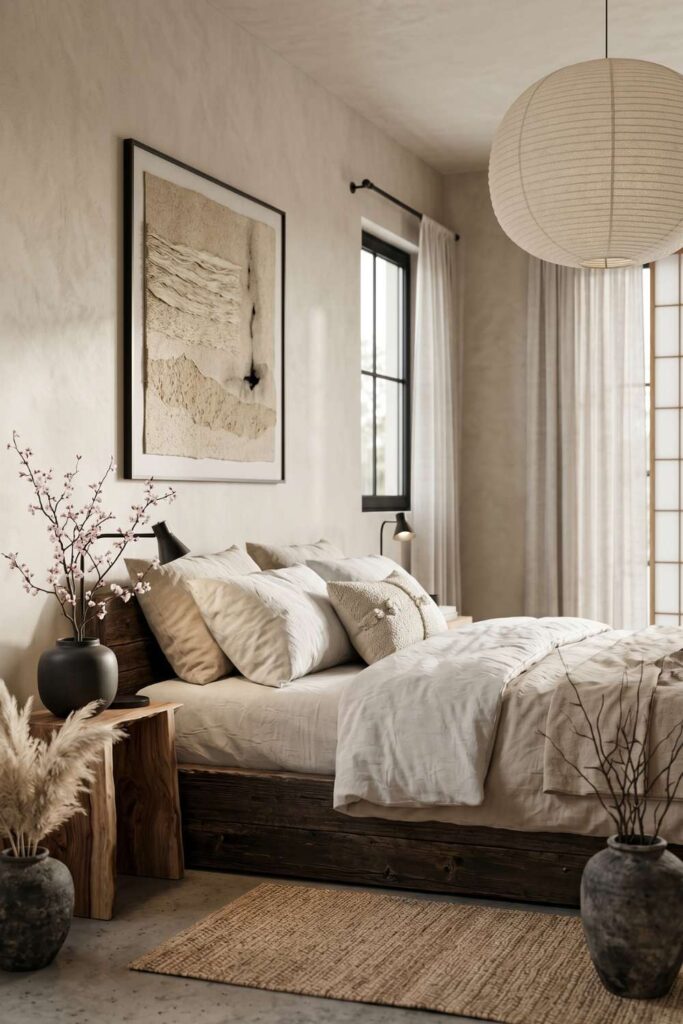
Shop Secondhand and Local Markets
Explore thrift stores, flea markets, and artisan shops for:
- Handmade ceramics
- Natural fiber baskets
- Unique, imperfect decor pieces
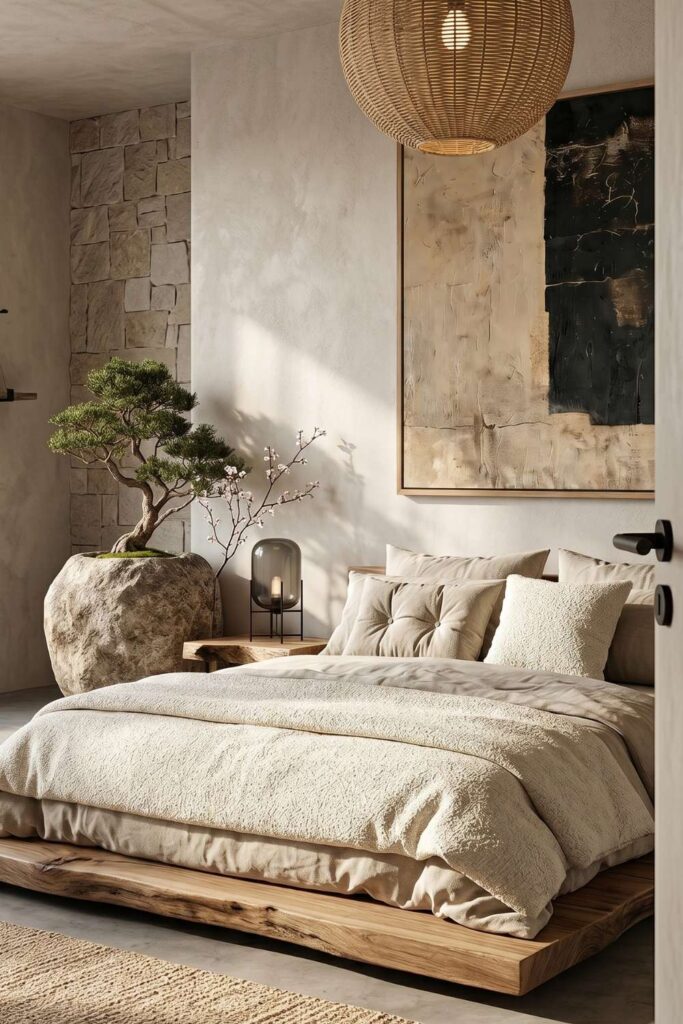
Affordable Wabi-Sabi Essentials
- Woven baskets (jute, rattan, or seagrass) for storage
- Paper lanterns for soft, diffused lighting
- Terracotta pots with simple greenery
- Linen-look textiles for a natural aesthetic
Product Selection to Help You Style Your Wabi-Sabi Bedroom:
Common Mistakes to Avoid in Wabi-Sabi Design
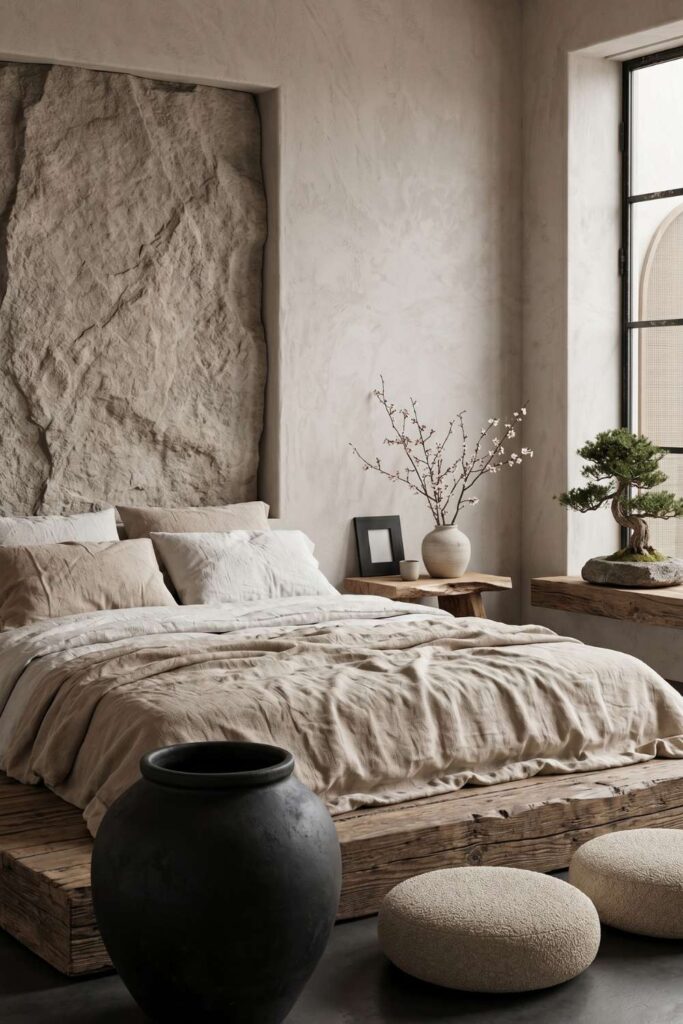
Over-Decorating
Wabi-Sabi embraces simplicity and space (known in Japanese aesthetics as ma). Avoid filling every surface. Let your room breathe.
Ignoring Texture
A flat, uniform space can feel lifeless. Always mix textures:
- Rough wood with soft linen
- Smooth ceramics with woven fabrics
- Natural fibers layered together
Forcing Perfection
Wabi-Sabi is not about creating a “perfectly styled” room. It is about authenticity. A frayed edge, uneven glaze, or aged surface is not a flaw—it is part of the story.
Your bedroom is just the beginning of your journey toward a more intentional home.
If you are ready to extend this peaceful aesthetic to the rest of your living space, check out my guide on: How to Create a Wabi-Sabi Living Room
Your Wabi-Sabi Sanctuary, Your Rules
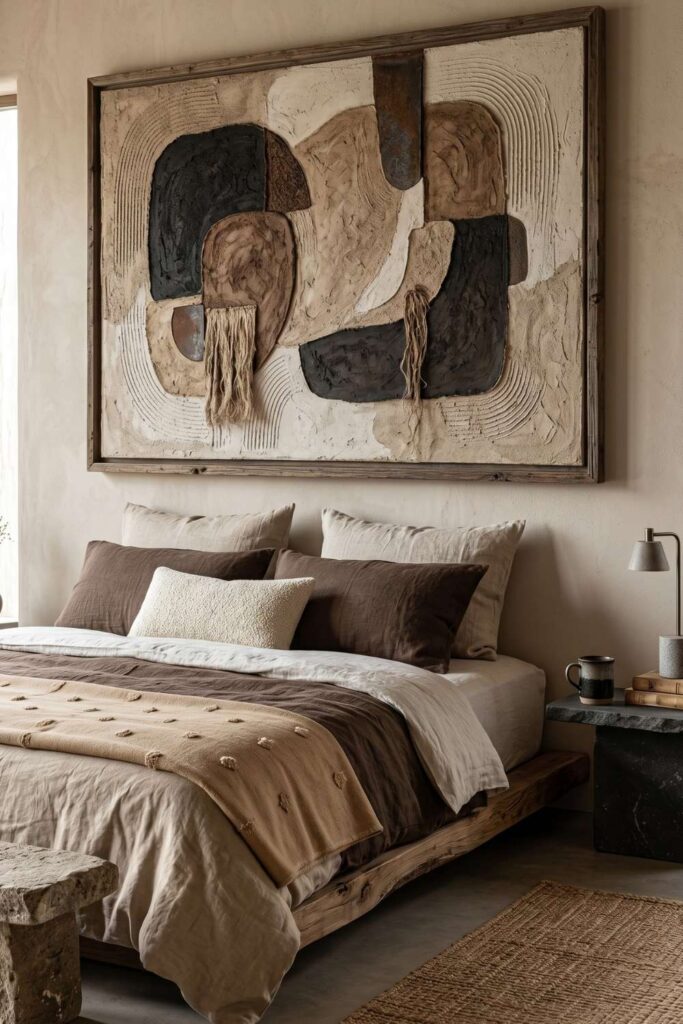
At its core, a Wabi-Sabi bedroom is not about strict design rules. It is about creating a space that supports emotional well-being, calm, and presence.
It invites you to slow down, appreciate simplicity, and find beauty in the imperfect and natural.
Start small. Focus on textures and materials that bring you peace. Let your space evolve naturally over time.
Before long, your bedroom will become more than just a place to sleep—it will become your personal sanctuary of serenity.
Disclosure & Disclaimer
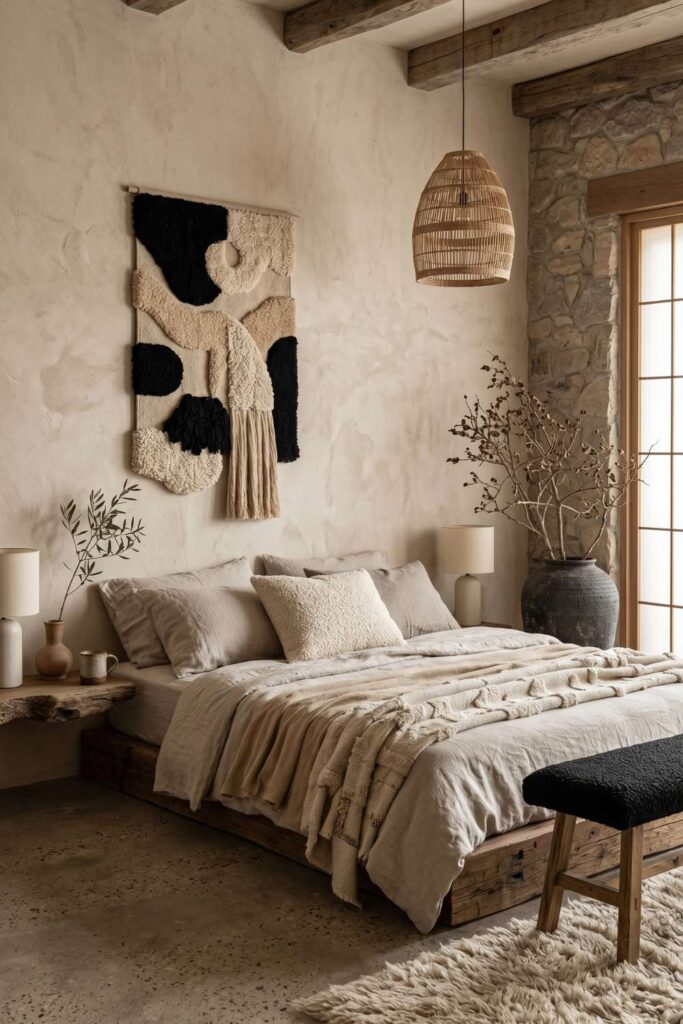
Inspiration & Images: The visual inspirations in this article are original AI-generated designs created specifically for this blog to illustrate the Wabi-Sabi aesthetic. These images are for inspirational purposes only and do not represent existing commercial spaces.
Product Recommendations: All product links and recommendations are curated by me as a Home Stylist. They reflect my personal research and design vision. I am not currently affiliated with the brands mentioned and do not earn any commissions from these links. My goal is simply to help you find the right pieces for your space.
Results & Accuracy: While I strive to provide the best advice, DIY results may vary depending on your space and lighting. I always recommend testing samples or checking product dimensions (such as rug sizes) in your own home before purchasing.