
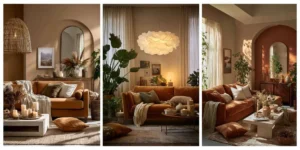
Terracotta is no longer just a passing interior design trend — it has become a timeless expression of warmth, comfort, and connection to nature.
Inspired by sun-baked Mediterranean landscapes, handcrafted ceramics, desert tones, and ancient architecture, this earthy shade brings an immediate sense of calm and character to a home.
From soft clay and muted apricot to deep burnt sienna and red ochre, terracotta has evolved into one of the most versatile warm neutrals in modern interiors. Unlike brighter oranges or reds, it feels grounded and sophisticated, creating spaces that are inviting without feeling overwhelming.
But there is a fine line between a refined terracotta living room and a space that feels overly rustic, dated, or themed.
The most successful terracotta interiors are not about covering every surface in orange tones. Instead, they focus on balance: combining organic warmth with contemporary shapes, natural materials, soft contrasts, and carefully layered textures.
Whether you want a cozy Mediterranean-inspired retreat, a modern organic living room, or a sophisticated minimalist space, terracotta can create a timeless atmosphere that feels both elegant and deeply welcoming.
Here is how to incorporate terracotta into your living room with style.
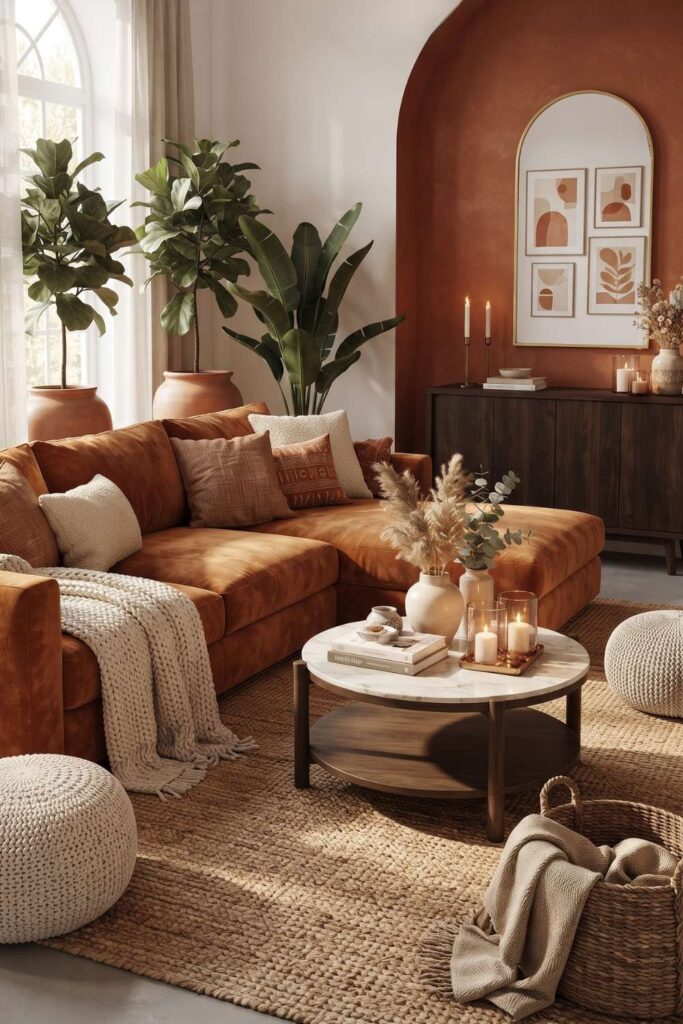
1. The Perfect Terracotta Palette: Create Soft and Sophisticated Contrasts
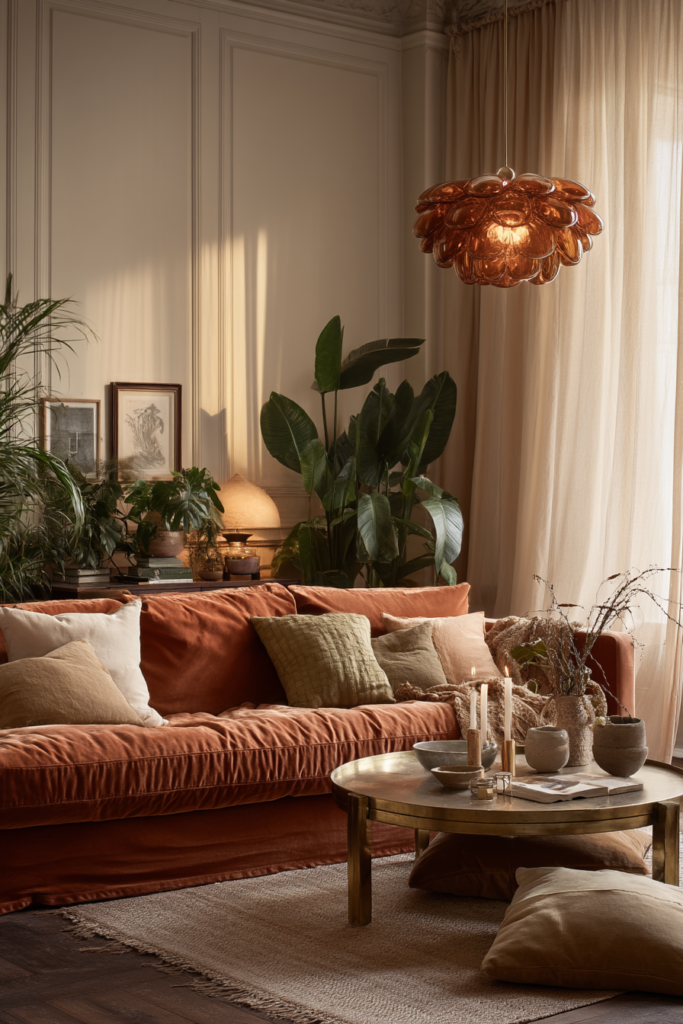
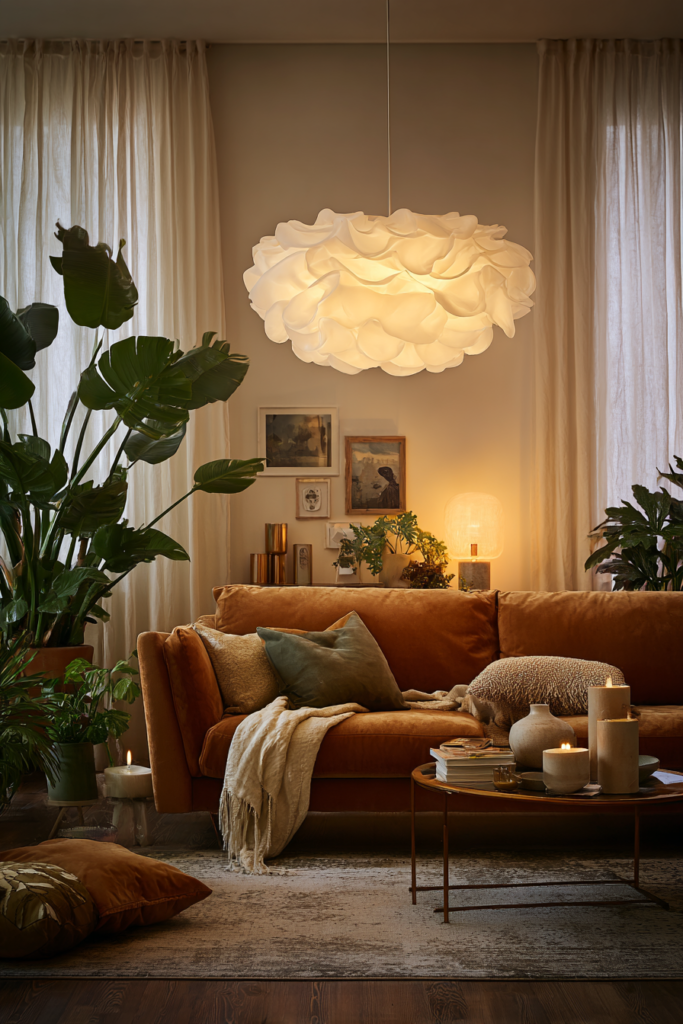
Terracotta is a powerful color because it naturally attracts attention. To prevent it from dominating the room, pair it with softer shades that allow its warmth to shine.
Pure white is often too stark next to terracotta and can create a harsh contrast. Instead, designers increasingly turn to warmer neutrals such as:
- Cream
- Warm beige
- Sand
- Linen
- Ivory
- Mushroom grey
- Soft taupe
- Greige
These subtle shades create a calm backdrop that enhances terracotta’s natural depth.
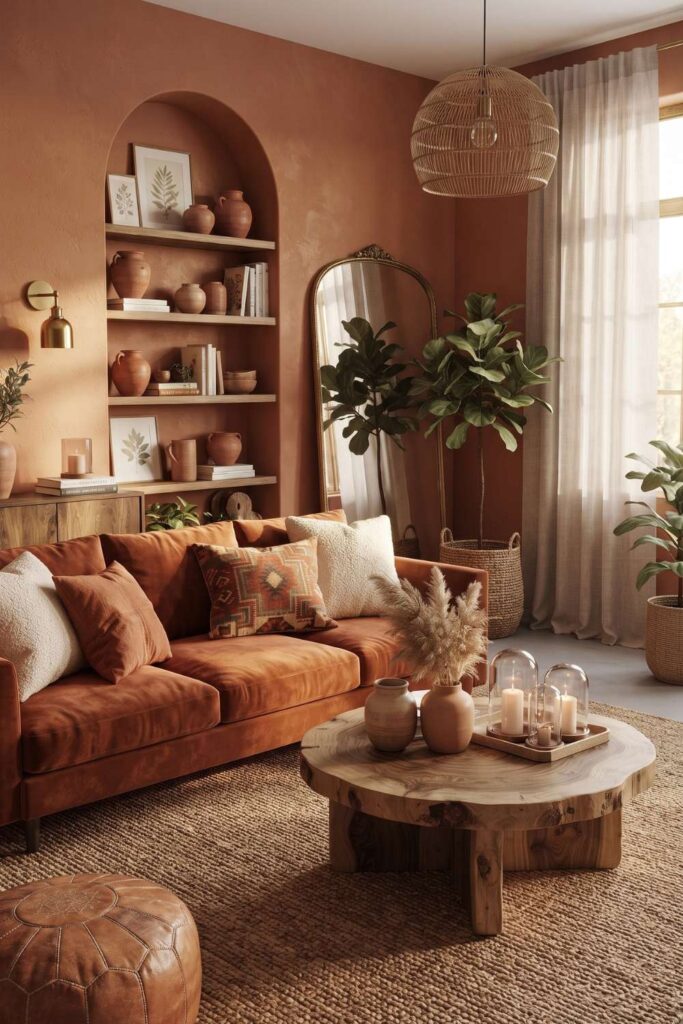
How to introduce terracotta into your living room:
A terracotta accent wall
A single terracotta wall can instantly transform a living room into a cozy, enveloping space.
This works particularly well behind:
- A sofa
- A fireplace
- A television wall
- A bookshelf
- A piece of large artwork
For a more architectural feel, consider painting:
- An arch
- A niche
- A built-in shelf
- A recessed corner
These details create visual interest without making the room feel smaller.
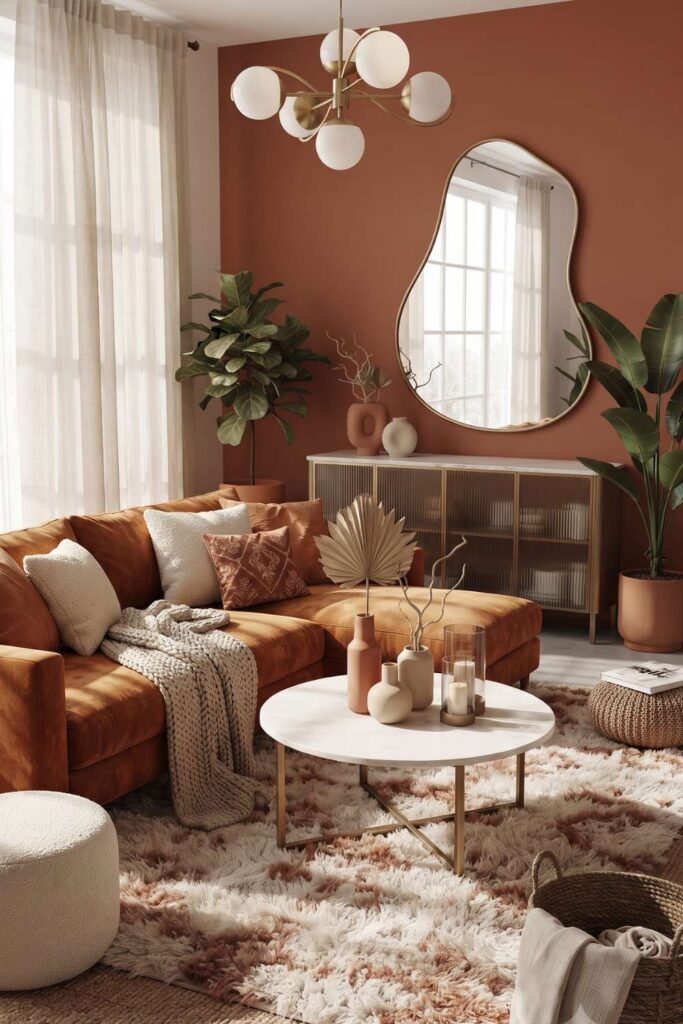
A terracotta sofa for a softer approach
If you prefer flexibility, a terracotta sofa is a beautiful alternative.
Placed against cream or beige walls, it becomes the focal point while maintaining a refined and timeless look.
Choose fabrics with texture such as:
- Velvet for a luxurious atmosphere
- Bouclé for softness
- Linen blends for a relaxed organic feel
- Corduroy for a cozy vintage touch
Small terracotta accents
For rooms with limited natural light, smaller touches can create the same warmth without absorbing too much brightness.
Try:
- Terracotta cushions
- Ceramic vases
- Decorative bowls
- Throws
- Curtains
- Artwork featuring earthy tones
The goal is not to create a “terracotta room”, but a room where terracotta feels naturally integrated.
2. Organic Shapes and Natural Materials: The Foundation of a Modern Terracotta Living Room
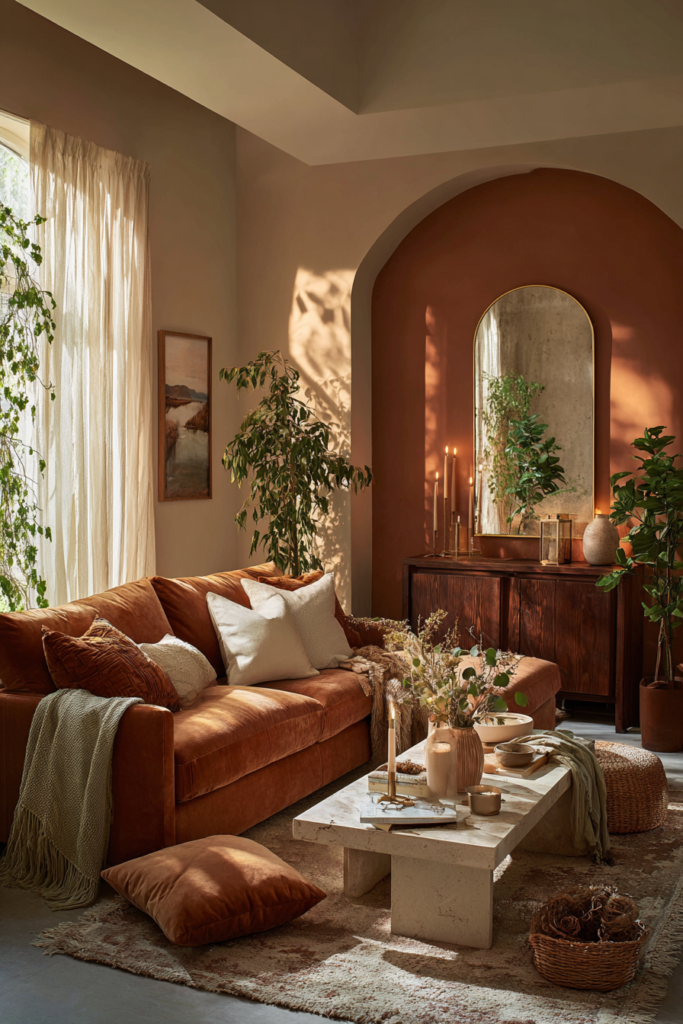
A contemporary terracotta interior should never feel rigid or overly decorated.
The secret to making this color feel modern is pairing it with soft shapes and tactile materials.
Think:
- Rounded sofas
- Curved armchairs
- Oval coffee tables
- Arched mirrors
- Sculptural lighting
- Handmade ceramics
These organic forms create a sense of movement and softness that perfectly complements earthy colors.
The best material combinations for terracotta:
Natural stone: Add timeless elegance
Materials such as:
- Travertine
- Limestone
- Marble with warm veins
- Polished concrete
bring a mineral quality that balances terracotta’s warmth.
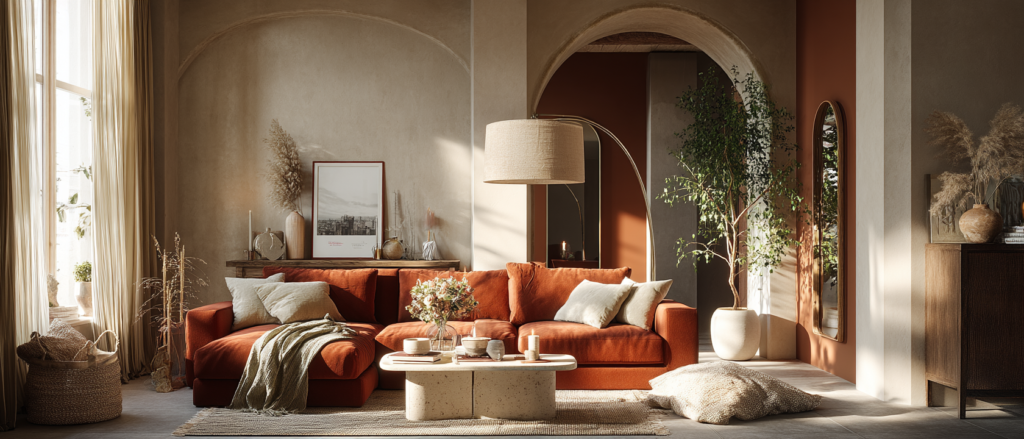
A travertine coffee table combined with a terracotta sofa, for example, creates an effortlessly sophisticated organic modern look.
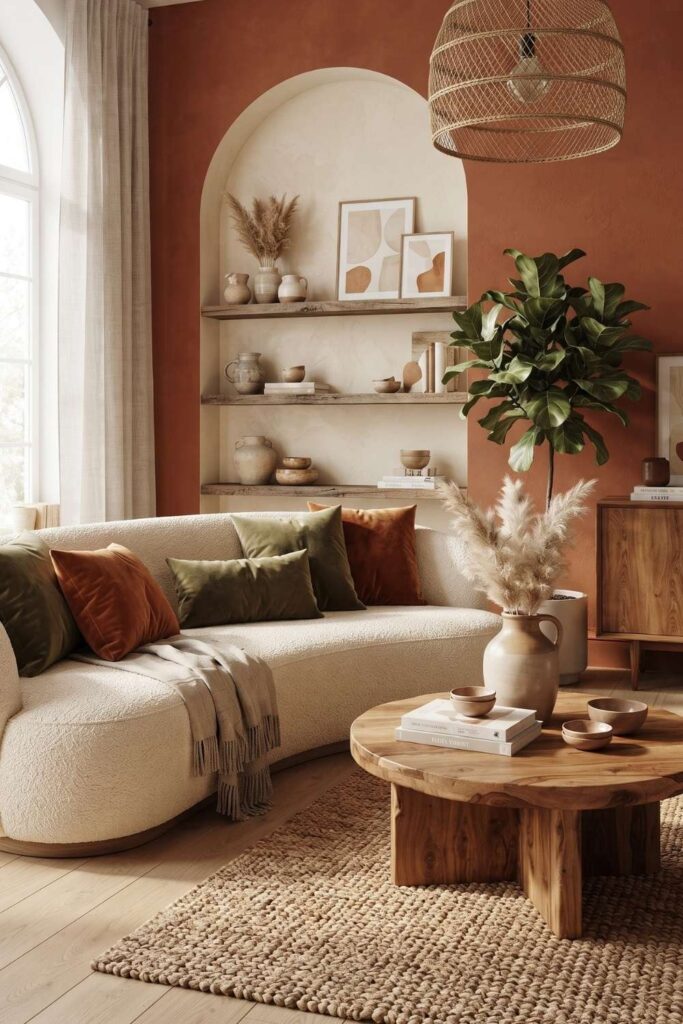
Light wood: Keep the atmosphere warm but fresh
Terracotta pairs beautifully with:
- Oak
- Ash wood
- Natural walnut
- Bamboo
Light woods prevent the room from becoming too heavy while reinforcing the connection with nature.
Textiles: Create depth through layering
Terracotta needs texture to truly shine.
Combine at least three tactile elements:
- A woven rug
- Linen curtains
- Bouclé cushions
- Velvet upholstery
- Wool throws
- Jute accessories
This creates the layered, sensory feeling that defines today’s most successful interiors.
Your Terracotta Living Room’s Master piece, the sofa:
Now we need to add Accessories:
3. Lighting: The Secret to Making Terracotta Glow
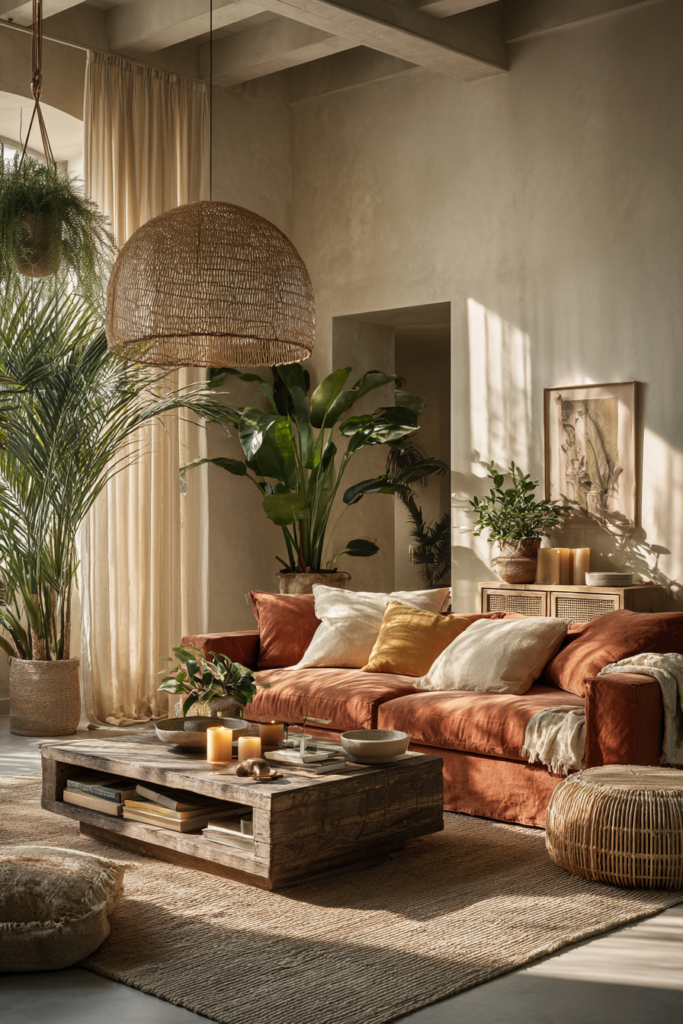
Terracotta is a color that changes dramatically depending on the light.
During the day, it can appear soft and earthy. In the evening, the wrong lighting can make it feel darker and heavier.
The solution is thoughtful, layered lighting.
Choose warm lighting temperatures
For a cozy atmosphere, use warm bulbs around 2700K.
Warm lighting enhances the copper, clay, and golden undertones of terracotta, making the entire room feel more inviting.
Avoid cold white lighting, which can make earthy colors appear flat or dull.
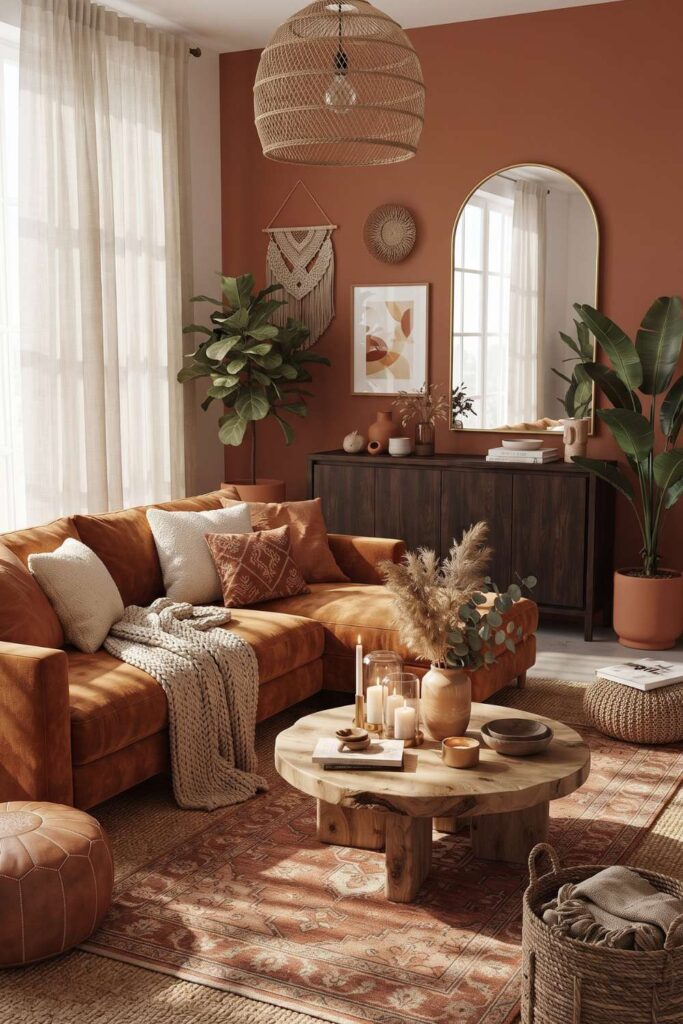
Layer multiple light sources
Instead of relying on one ceiling light, combine different levels of illumination:
- Floor lamps beside the sofa
- Table lamps on consoles
- Wall sconces
- Decorative pendant lights
- Candles and lanterns
This creates depth and highlights the textures of the room.
Choose natural-looking fixtures
Materials that work especially well with terracotta include:
- Linen lampshades
- Rice paper pendants
- Brushed brass
- Aged bronze
- Ceramic lamps
- Smoked glass
The objective is to create a soft glow rather than a brightly lit showroom effect.
Shop the look:
- Large Rattan Pendant Light
- Woven Seagrass Pendant Light
- Chenille Throw Pillow (Rust, Brown, Cream, Grey.. They have so many colors!)
- Rattan Coffee Table
- Darker Rattan Coffee Table
- Wood & Rattan Cabinet
4. Terracotta and Color Combinations: The Most Beautiful Pairings
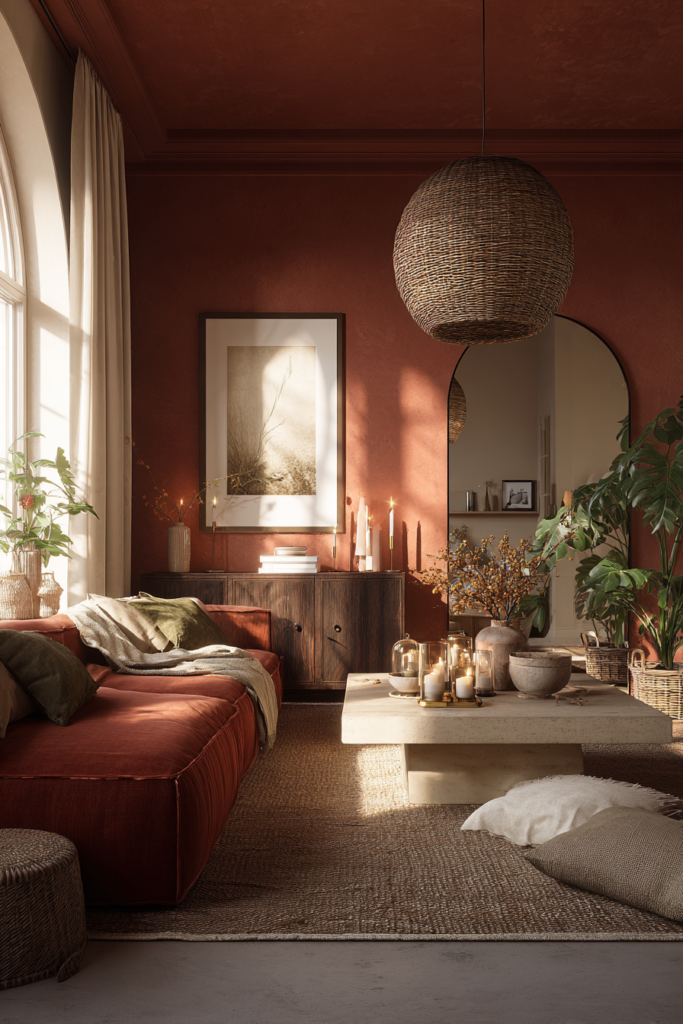
Although terracotta works beautifully with neutrals, some of the most sophisticated interiors combine it with deeper or unexpected shades.
Terracotta and sage green: A natural, biophilic combination
One of the most popular pairings in modern interiors is terracotta with muted greens.
The coolness of sage or olive green balances the warmth of terracotta, creating a palette inspired by nature:
- Clay
- Plants
- Dried grasses
- Mediterranean landscapes
This combination works beautifully in:
- Organic modern interiors
- Wabi-sabi spaces
- Japandi-inspired homes
Add greenery, linen fabrics, and natural wood to complete the look.
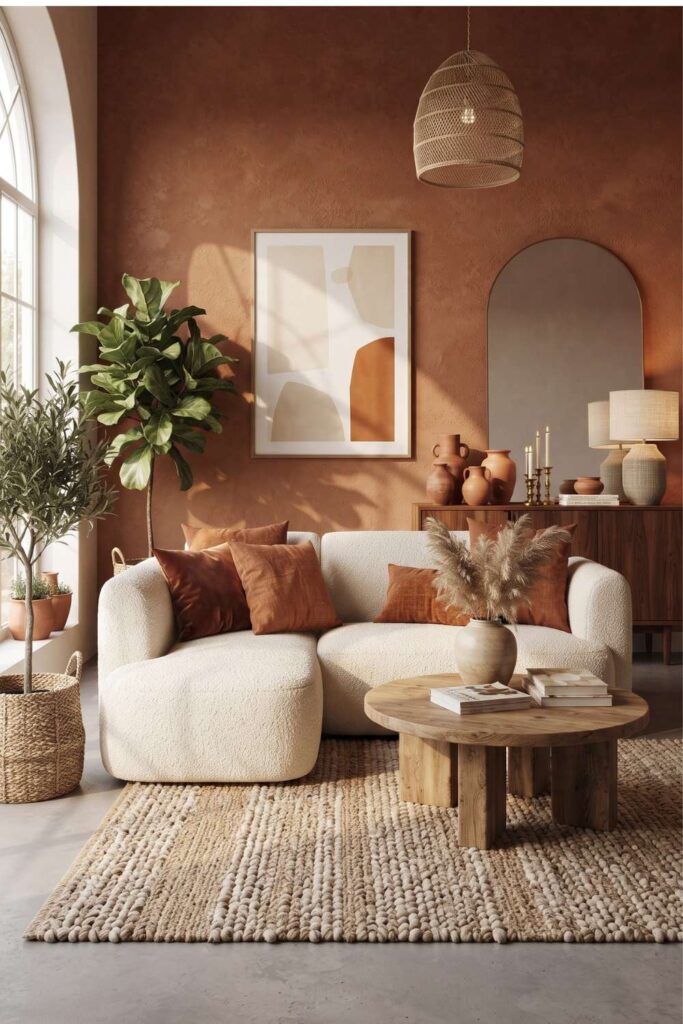
Terracotta and deep blue: Sophisticated contrast
For a more dramatic atmosphere, combine terracotta with:
- Navy blue
- Midnight blue
- Petrol blue
The contrast creates a more luxurious and contemporary feeling.
Use darker shades through:
- Artwork
- Accent chairs
- Curtains
- Decorative objects
rather than covering large surfaces.
Terracotta and charcoal: Modern and architectural
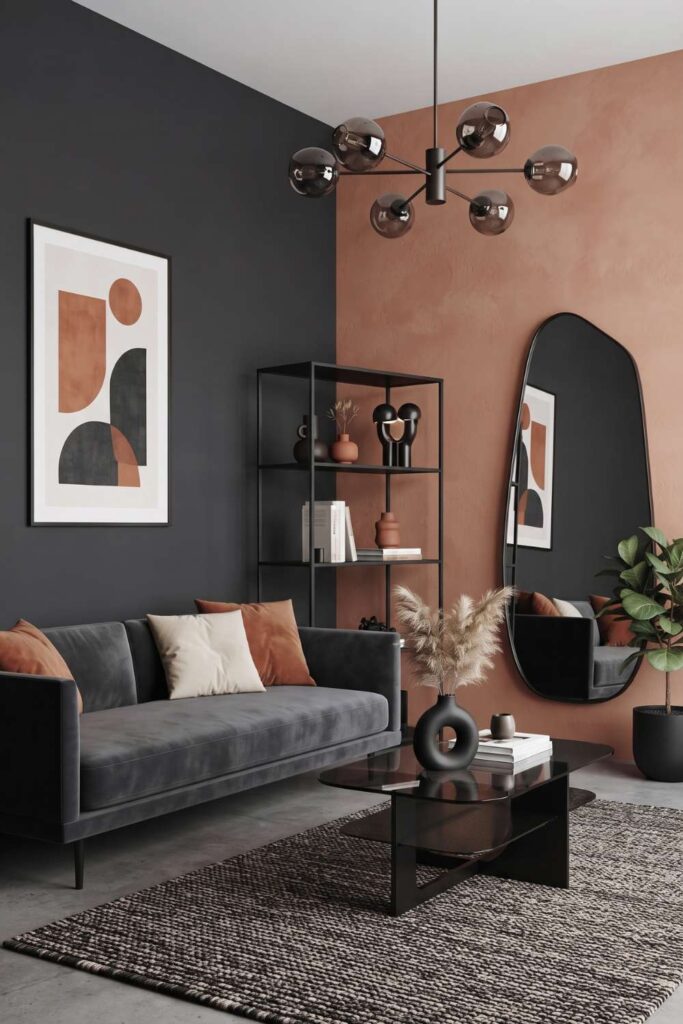
Charcoal grey or matte black details can instantly make terracotta feel more contemporary.
Try:
- Black metal shelving
- Dark lighting fixtures
- Black frames
- Minimalist furniture
The result is a refined, modern aesthetic with strong personality.
Terracotta and metallic accents
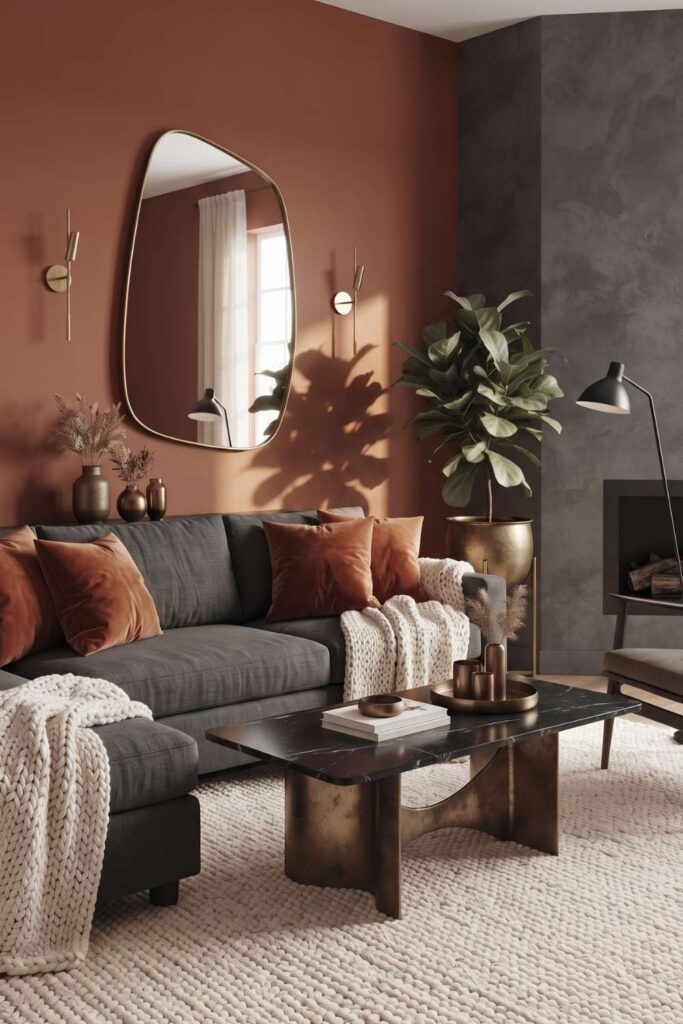
Small metallic details act like jewelry in the room.
The best choices:
- Brushed brass
- Aged bronze
- Matte black
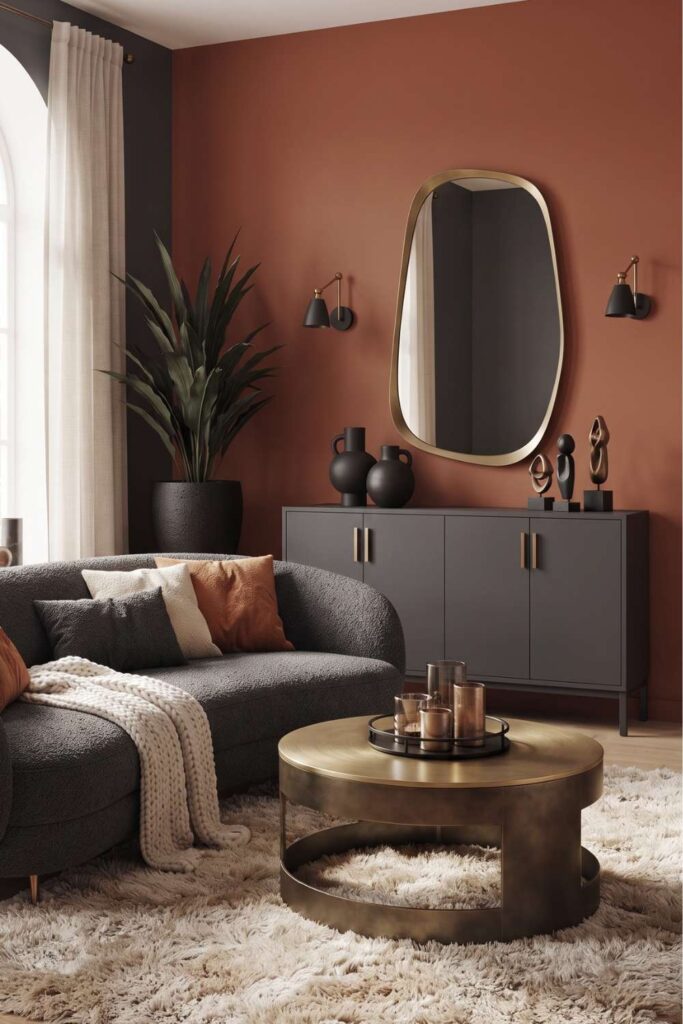
Avoid overly shiny gold finishes, which can make the room feel less timeless.
Shop the look:
5. Small Living Rooms: Can Terracotta Work in a Limited Space?
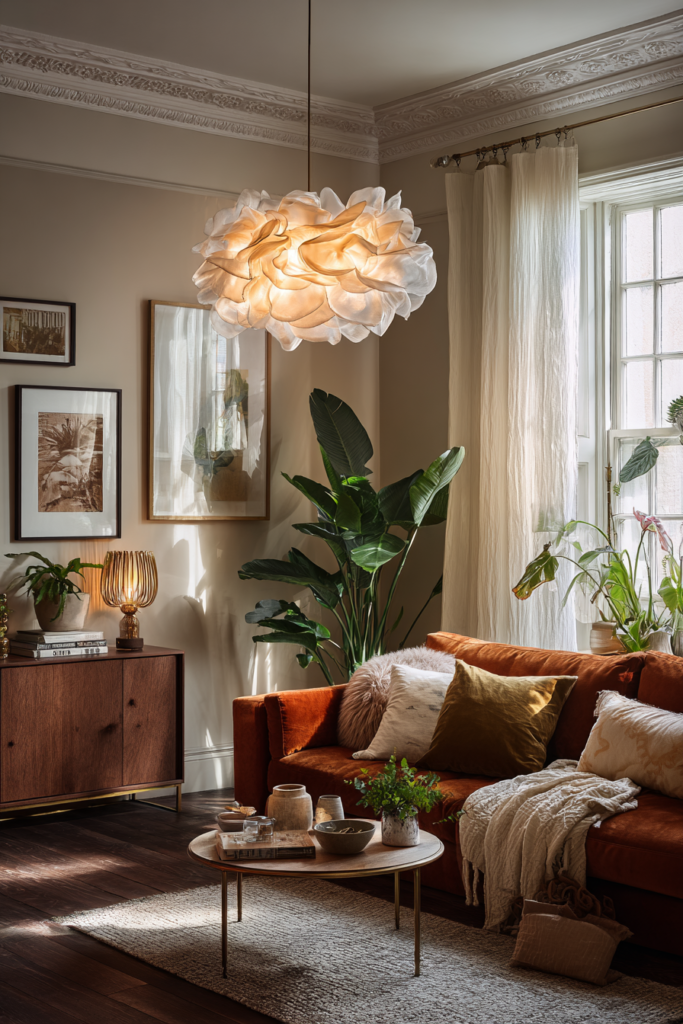
Many people hesitate to use warm, saturated colors in small living rooms because they fear making the space feel smaller.
However, terracotta can actually make a compact room feel more intentional, cozy, and sophisticated.
The key is choosing the right approach.
Try color drenching
Instead of painting only one wall, consider extending the color across:
- Walls
- Door frames
- Baseboards
- Ceiling
This technique creates fewer visual interruptions and can make the room feel larger and more cohesive.
For small spaces, softer terracotta shades or clay-inspired beige tones often work best.
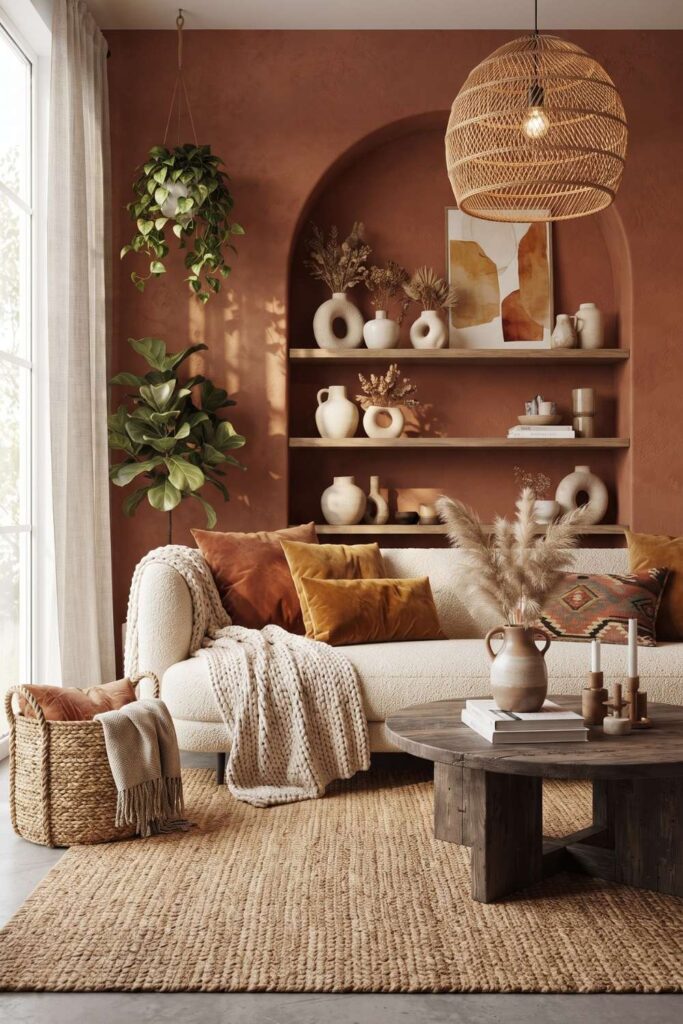
Use mirrors to reflect light
Large mirrors are particularly effective with terracotta walls.
Choose:
- Arched mirrors
- Antique-style mirrors
- Frameless mirrors
They reflect light while adding another organic shape to the room.
Keep furniture proportions balanced
Avoid overcrowding the space.
Choose:
- Low-profile sofas
- Slim-legged furniture
- Round coffee tables
- Open shelving
A small terracotta armchair or accent cushions can often create more impact than a very large statement sofa.
6. Terracotta Living Room Styles to Inspire Your Design
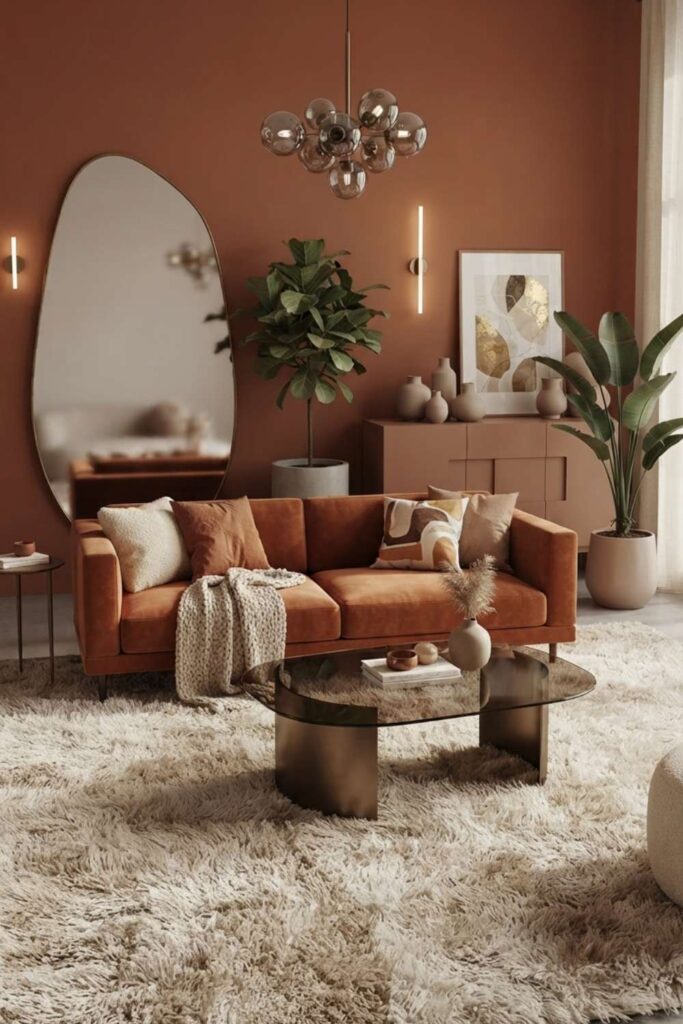
Terracotta is incredibly versatile because it adapts to many interior styles.
Mediterranean Modern
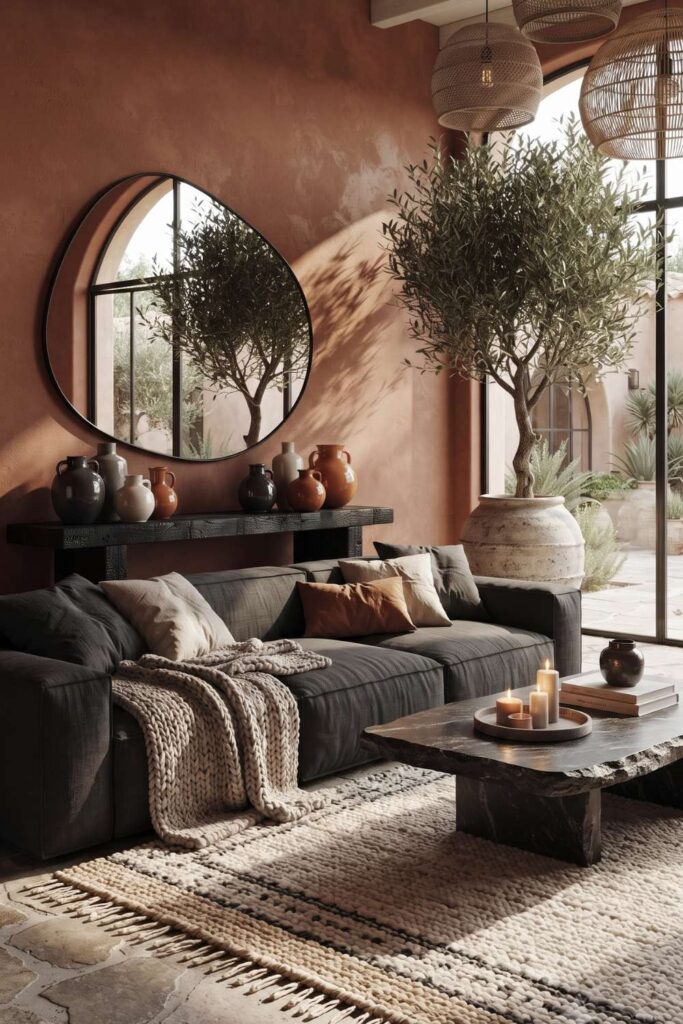
Combine terracotta with:
- Limewashed walls
- Linen textiles
- Natural stone
- Olive trees
- Handmade ceramics
The result feels like a modern Mediterranean villa.
Organic Modern
Focus on:
- Curved furniture
- Neutral colors
- Natural materials
- Minimal decoration
Terracotta becomes the warm element that prevents the space from feeling cold.
Wabi-Sabi Inspired
Embrace imperfection through:
- Handmade objects
- Raw textures
- Aged wood
- Simple forms
Terracotta ceramics and earthy walls perfectly complement this philosophy.
Mid-Century Modern
Pair terracotta with:
- Walnut furniture
- Vintage-inspired lighting
- Geometric patterns
The result feels warm, nostalgic, and elegant.
7. Common Mistakes to Avoid with Terracotta Interiors
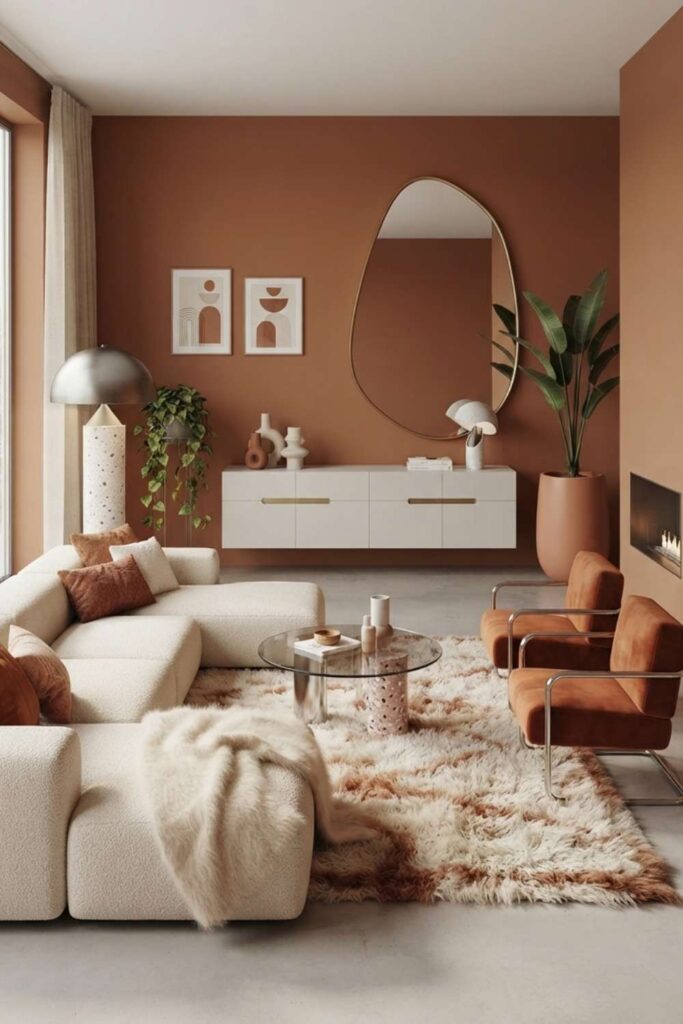
Even though terracotta is a beautiful color, a few mistakes can make the space feel outdated.
Avoid combining too many warm tones
Too much orange, brown, beige, and red together can make a room feel heavy.
Balance terracotta with:
- Cooler greens
- Soft greys
- Natural whites
- Black accents
Avoid making everything terracotta
The goal is harmony, not saturation.
One strong terracotta element surrounded by carefully chosen neutrals often creates a more luxurious result.
Avoid poor lighting
A terracotta room without enough light can lose its softness.
Always combine natural light with layered artificial lighting.
Final Thoughts: Why Terracotta Will Remain Timeless
Terracotta represents something many homeowners are looking for today: a home that feels warm, authentic, and connected to nature.
It is not simply a color trend. It reflects a broader movement toward interiors inspired by craftsmanship, natural materials, and emotional comfort.
When balanced with soft neutrals, organic shapes, and thoughtful textures, terracotta creates a living room that feels sophisticated yet welcoming — a space designed not only to look beautiful, but to be lived in.
Shop the look:
Terracotta is more than just a color : it’s an atmosphere — a way to create a warm, elegant, and deeply alive interior.
FAQ: Terracotta Living Rooms
Is terracotta still trendy in 2026?
Yes. Terracotta has evolved from a short-term trend into a timeless earthy neutral. Its connection with natural materials and biophilic design makes it particularly relevant in modern interiors.
What colors go best with terracotta?
The most elegant combinations include cream, beige, sage green, olive, navy blue, charcoal grey, natural wood, and brushed brass.
Is terracotta suitable for small living rooms?
Yes. When used correctly, terracotta can make a small living room feel cozy and intentional. Soft shades, mirrors, and balanced furniture proportions help maintain a spacious feeling.
What decorating style works best with terracotta?
Terracotta works beautifully with organic modern, Mediterranean modern, Japandi, Wabi-Sabi, and mid-century modern interiors.
Disclosure & Disclaimer
Inspiration & Images: The visual inspirations in this article are original AI-generated designs created specifically for this blog to illustrate the Aesthetic. These images are for inspirational purposes only and do not represent existing commercial spaces.
Product Recommendations: All product links and recommendations are curated by me as a Home Stylist. They reflect my personal research and design vision. I am not currently affiliated with the brands mentioned and do not earn any commissions from these links. My goal is simply to help you find the right pieces for your space.
Results & Accuracy: While I strive to provide the best advice, DIY results may vary depending on your space and lighting. I always recommend testing samples or checking product dimensions (such as rug sizes) in your own home before purchasing.