
A step-by-step guide to a calm, authentic and timeless space
Wabi-sabi is quickly becoming one of the most sought-after interior design styles for 2026.
Natural, calming and deeply authentic, it invites us to slow down and reconnect with our space in a more intentional way.
But let’s be honest.
When you search for “wabi-sabi living room” on Pinterest or Instagram, it often feels like this style is reserved for magazine interiors, designer homes, or very comfortable budgets.
Here’s the good news : that’s not true.
Creating a wabi-sabi inspired living room on a budget is absolutely possible , as long as you understand the philosophy behind it and focus on how a space feels, rather than how perfect it looks.
In this guide, I’ll walk you through clear, simple steps to help you create a warm, balanced and calming wabi-sabi living room without overspending, and without feeling overwhelmed.
You will find a short list of product recommandations to help you get inspired, at the end of this article.
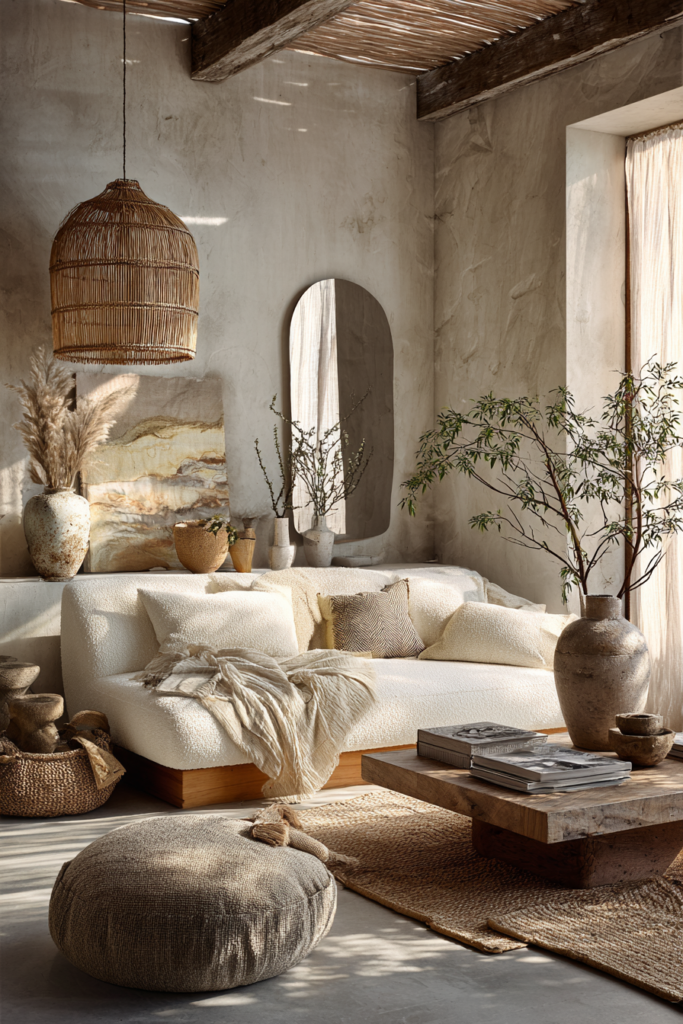
Step 1 : Understand what wabi-sabi really is
(and what it’s not)
Wabi-sabi is not a trend.
It’s a mindset.
At its core, it celebrates:
- imperfection
- simplicity
- authenticity
- the beauty of time and natural wear
A wabi-sabi living room doesn’t try to impress.
It invites you to breathe.
This means:
- no perfectly matched furniture sets
- no over-styled shelves
- no shiny, flawless finishes
Instead, the goal is to create a space that feels lived-in, calm, grounded and honest.
If you remember only one thing, let it be this:
wabi-sabi is about feeling, not perfection.
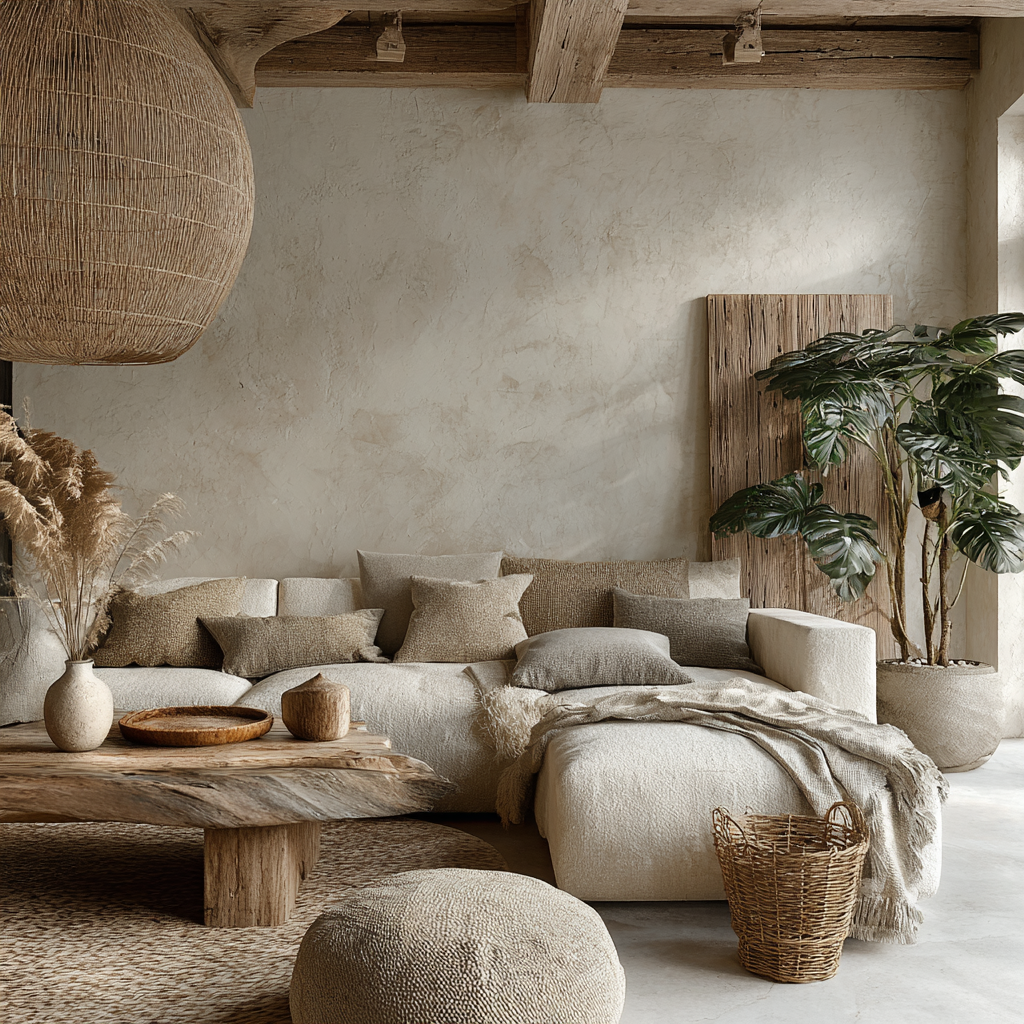
Step 2 : Start by simplifying your spaceefore buying anything, take a step back.
A wabi-sabi living room needs room to breathe.
Empty space is not a problem, it’s part of the design.
Ask yourself:
- What can I remove instead of add?
- Which objects feel unnecessary or visually noisy?
- What do I keep only out of habit?
You don’t need to declutter aggressively.
Just create visual calm.
A few meaningful, textured objects will always feel more powerful than a shelf full of random decor.
Step 3 : Build a soft, natural color paletteColor is one of the easiest (and cheapest) ways to set the tone.
For a wabi-sabi living room, stick to:
- warm beige
- off-white
- sand
- linen
- soft brown
- subtle mineral tones
Avoid strong contrasts or sharp colors.
The goal is a palette that feels organic and soothing, like natural materials under soft daylight.
You don’t need everything to be the same shade — gentle variation adds depth and warmth.
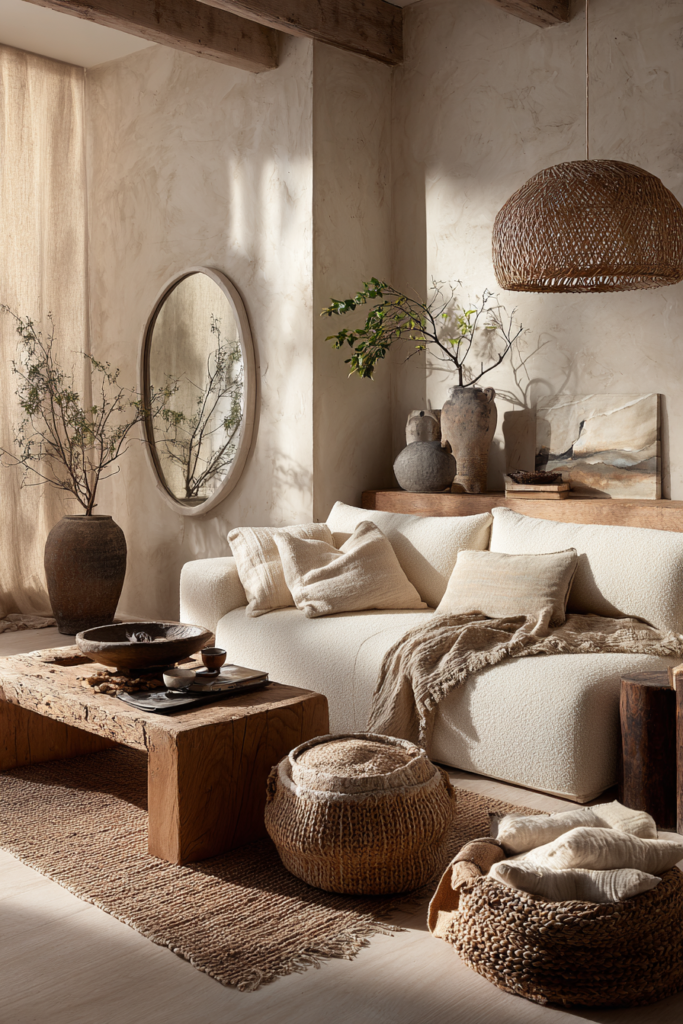
Step 4 : Focus on materials, not trends
Wabi-sabi doesn’t rely on brands or expensive design pieces.
It relies on materials.
Look for:
- wood with visible grain or imperfections
- matte ceramics
- stone, clay or concrete textures
- natural fabrics like linen or textured cotton
A simple object made from the right material will always feel more authentic than a trendy decorative item.
When in doubt, choose:
- matte over glossy
- textured over smooth
- simple over decorative
Step 5 : Choose organic and imperfect shapes
Perfect symmetry is not the goal here.
In a wabi-sabi living room, shapes should feel:
- soft
- rounded
- slightly irregular
This can be:
- a coffee table with organic lines
- an asymmetrical mirror
- handmade ceramics with subtle imperfections
These elements bring warmth and humanity into the space, even when the room remains minimal.
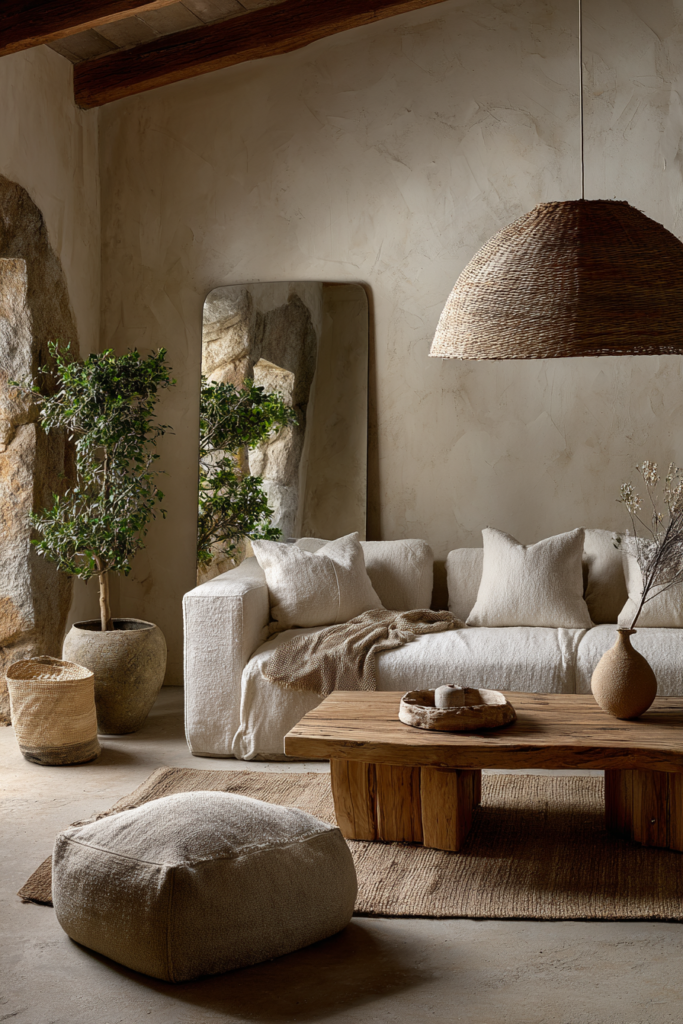
Step 6 : Layer textures to create warmth (without clutter)
Texture is what prevents a neutral space from feeling cold.
You can add depth through:
- a thick, textured rug
- linen or cotton cushions
- a soft throw with visible weave
- ceramic or stone decorative pieces
Keep the color palette simple and let the textures do the work.
A good rule of thumb:
Fewer objects, but richer textures.
Step 7 : Let light and atmosphere do the heavy lifting
Lighting plays a huge role in a wabi-sabi interior.
If possible:
- let natural light flow freely
- avoid heavy curtains
- keep window areas uncluttered
For artificial lighting:
- choose warm light bulbs
- favor soft, diffused lighting
- avoid harsh overhead lights
A single beautiful lamp with a soft glow often works better than several small light sources.
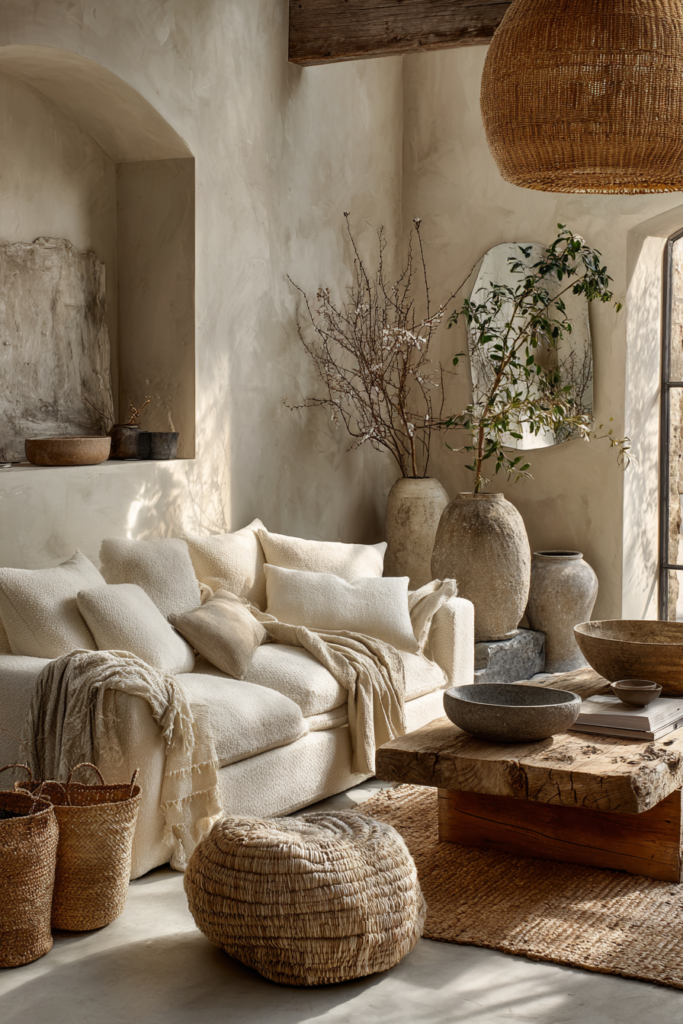
Step 8 : Mix old and new whenever you can
A wabi-sabi living room should never feel “brand new”.
If you already own:
- an older piece of furniture
- a slightly worn wooden table
- a vintage or second-hand item
Keep it.
Small signs of wear add soul to a space.
They tell a story — and that’s exactly what wabi-sabi is about.
Step 9 : Add life through natural elements
Nature is essential in wabi-sabi interiors.
You don’t need a jungle:
- one plant with generous leaves is enough
- choose a simple, neutral pot
- avoid overly decorative planters
The goal is to bring a quiet connection to nature, not to decorate for the sake of it.
Step 10 : Trust the feeling, not the final look
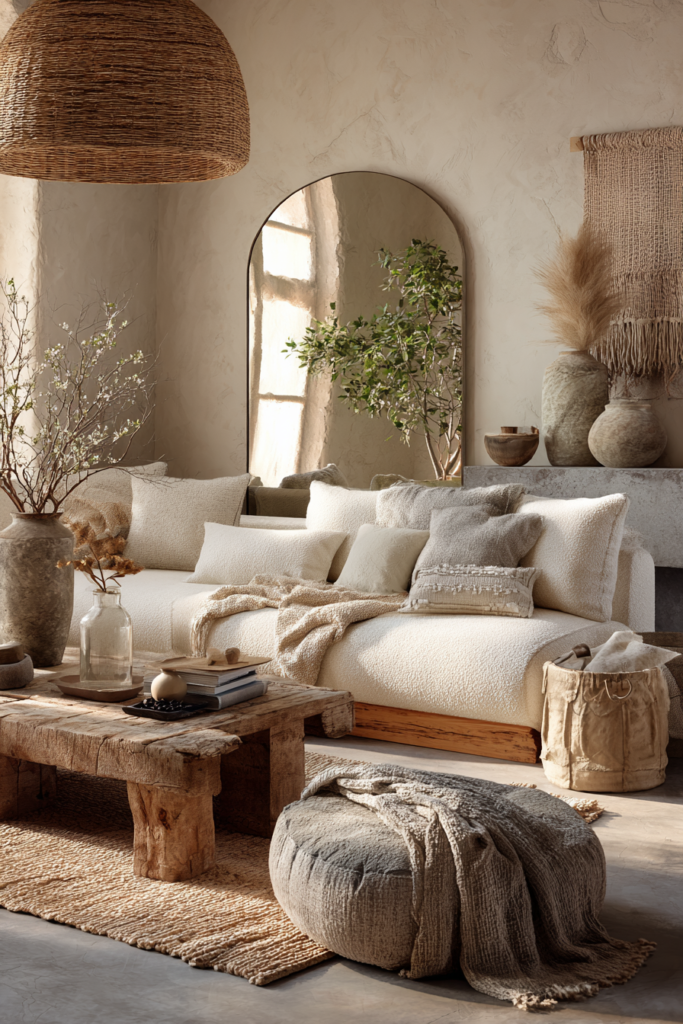
This might be the most important step.
A wabi-sabi living room doesn’t need to look perfect in photos.
It needs to feel right when you live in it.
Ask yourself:
- Does this space calm me?
- Does it feel welcoming?
- Can I slow down here?
If the answer is yes, you’re doing it right.
Final thoughts
Creating a wabi-sabi living room on a budget is not about shopping more.
It’s about choosing better, simplifying intentionally, and allowing imperfection to exist.
Take your time.
Let your space evolve slowly.
Wabi-sabi is not something you “finish”, it’s something you live with.
Affordable wabi-sabi essentials to elevate your living room on a budget:
(Shop The Look)
Natural hanging light:
The centerpiece of the room: the coffee table:
Less is More , Pick only a few accessories to enhance the room:
- Oversized Full length arched mirror
- Black and white throw blanket (I love this Blanket)
- Grey Ceramic Vase
To bring Wabi-Sabi to your living room, opt for a natural rug like wool or jute. If you’re on a budget, jute is the way to go, as wool tends to be much more expensive:
Disclosure & Disclaimer
Inspiration & Images: The visual inspirations in this article are original AI-generated designs created specifically for this blog to illustrate the Wabi-Sabi aesthetic. These images are for inspirational purposes only and do not represent existing commercial spaces.
Product Recommendations: All product links and recommendations are curated by me as a Home Stylist. They reflect my personal research and design vision. I am not currently affiliated with the brands mentioned and do not earn any commissions from these links. My goal is simply to help you find the right pieces for your space.
Results & Accuracy: While I strive to provide the best advice, DIY results may vary depending on your space and lighting. I always recommend testing samples or checking product dimensions (such as rug sizes) in your own home before purchasing.
Ik ga hier helemaal in mee. Mijn gevoel. Mijn ideeën komen tot stand. Dit is helemaal mijn ding.
I’m so glad to hear that! It’s amazing to know that my ideas resonate with you so deeply. Thank you for the kind words!
[…] Your bedroom is just the beginning of your journey toward a more intentional home. If you are ready to extend this peaceful aesthetic to the rest of your living space, check out my guide on: How to Create a Wabi-Sabi Living Room […]