
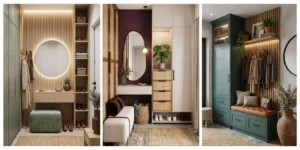
The struggle is real: you walk through the door after a long day, and you’re immediately greeted by a mountain of shoes, tangled leashes, and a chaotic pile of mail. Your entryway should be a transition zone that breathes peace, not a storage locker for chaos.
Drawing inspiration from the latest “warm minimalist” and “organic modern” trends, this 10-step guide will show you how to solve the entryway clutter problem for good with a stylish, floor-to-ceiling solution.
In this article , i will show you complete shopping lists to recreate the look easely at home !
All products mentionned are personnal recommendations, i do not earn any commition if you buy these products.
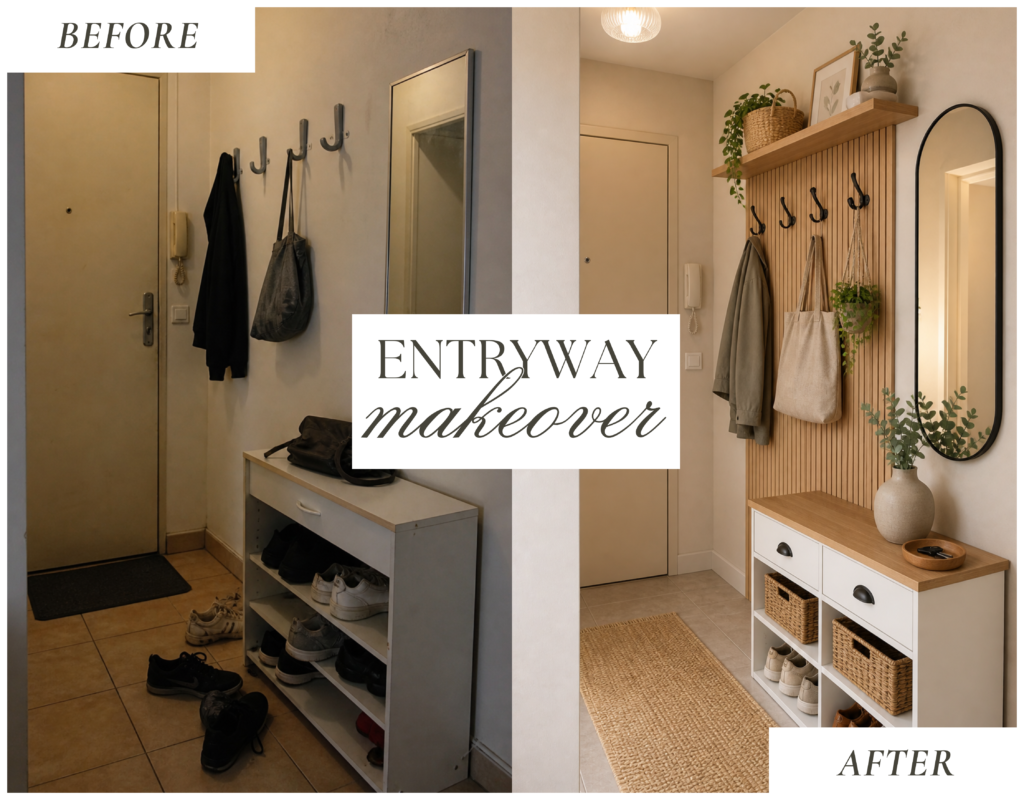
1. The Power of Vertical Storage
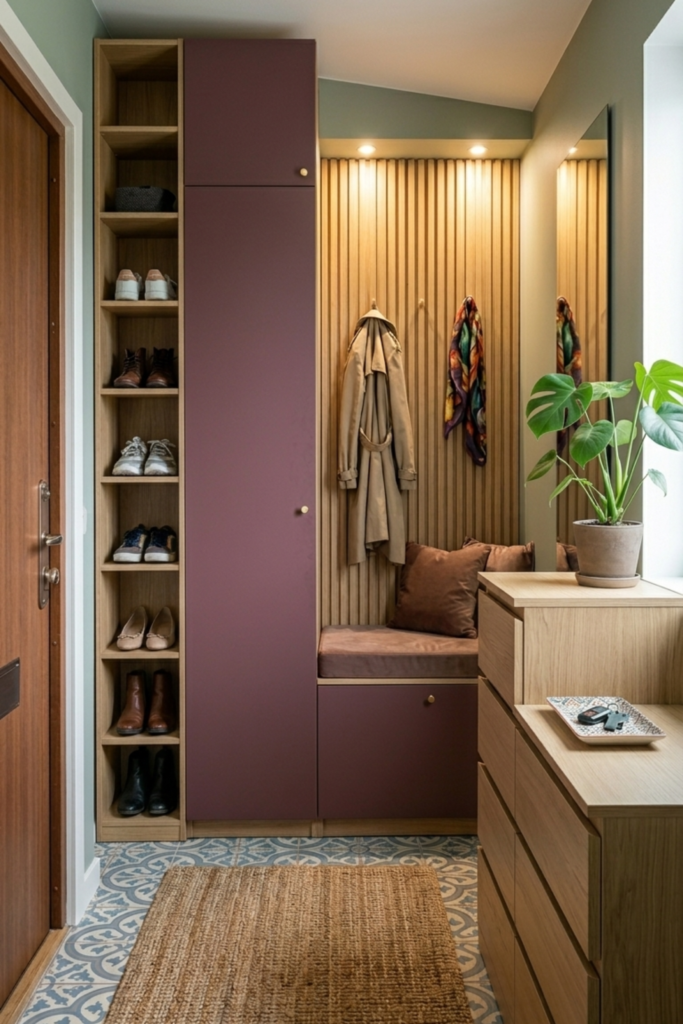
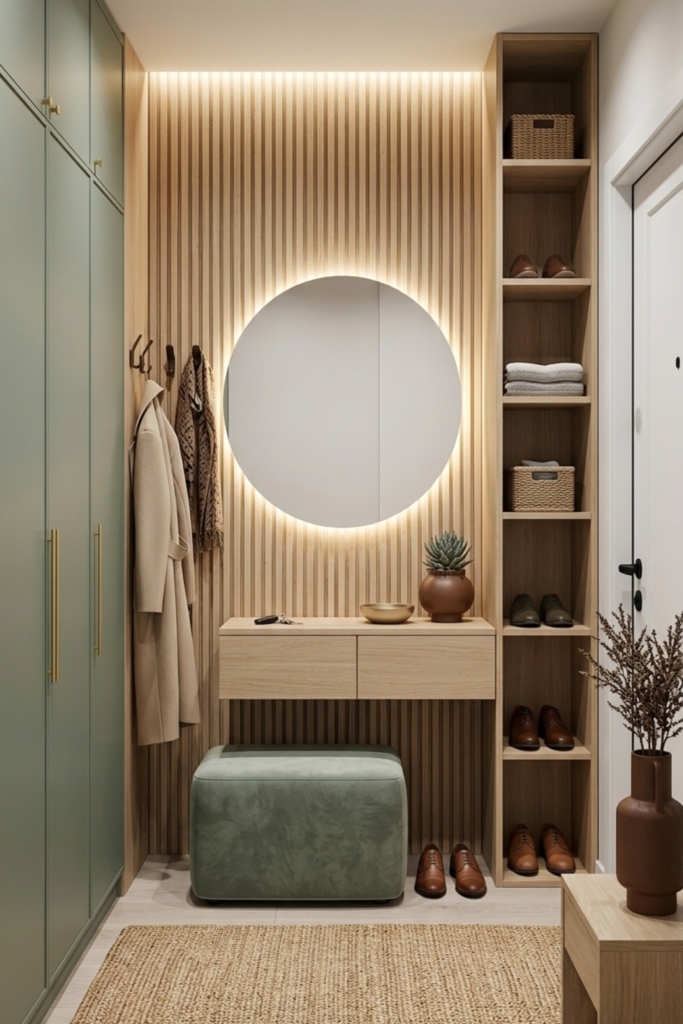
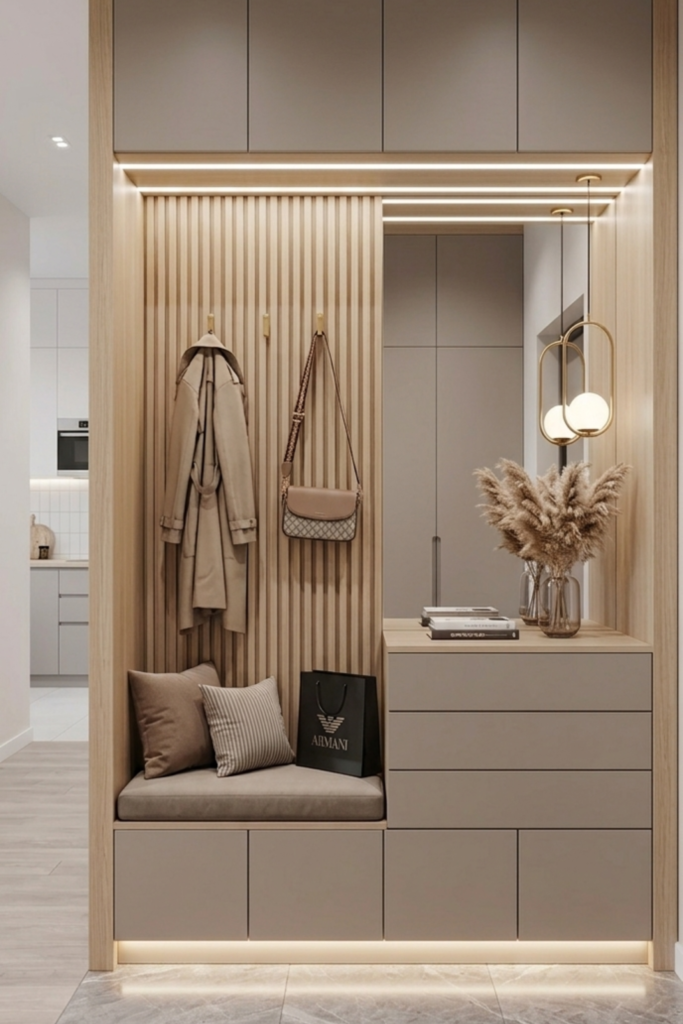
The biggest mistake in small entryways is only using the bottom half of the wall. To maximize space, think floor-to-ceiling. By installing tall cabinetry or open shelving that reaches the top, you create a visual “frame” for the room while hiding seasonal items (like winter hats or summer beach bags) out of sight.
IKEA Hack For a Easy Home Made Entryway Storage:
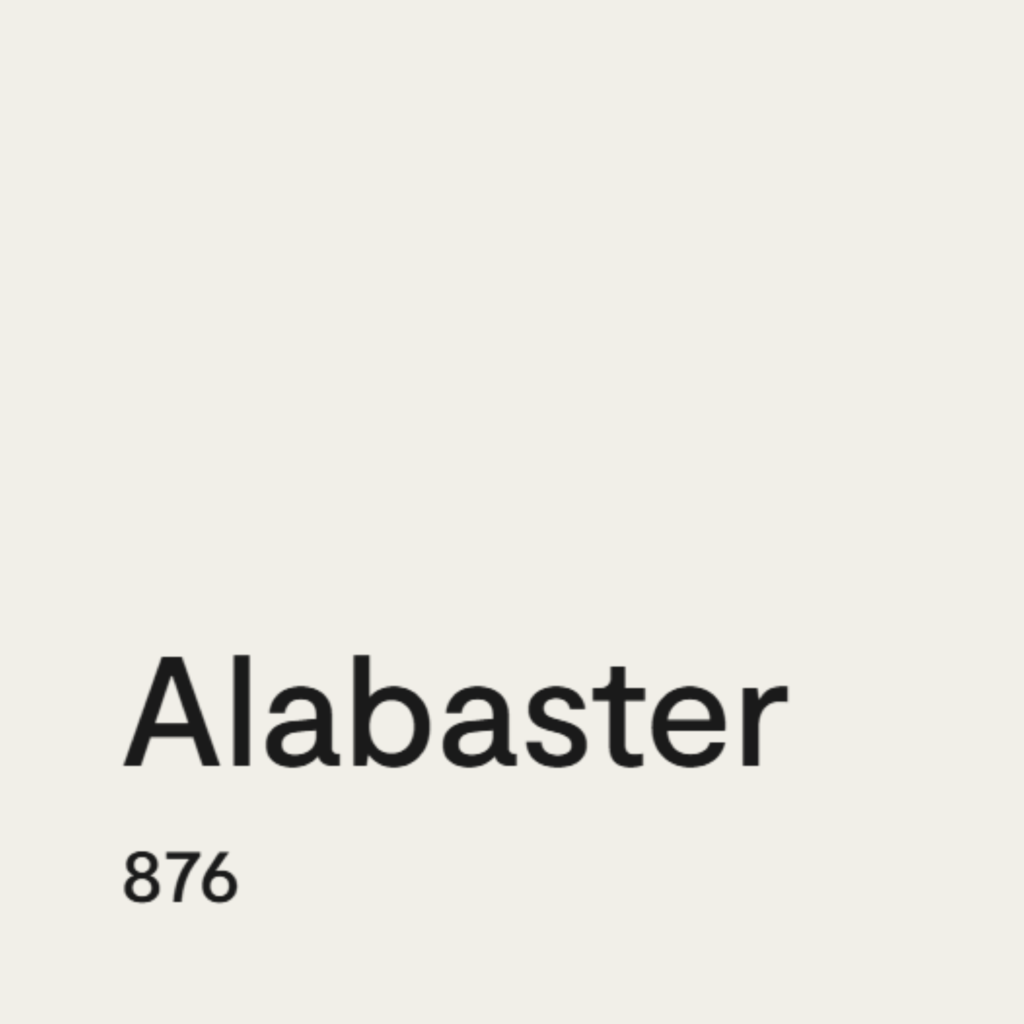
Click the color selection below to visit Benjamin Moore’s Website and find your most perfect color:


2. Incorporate Slat Wall Panels for Texture
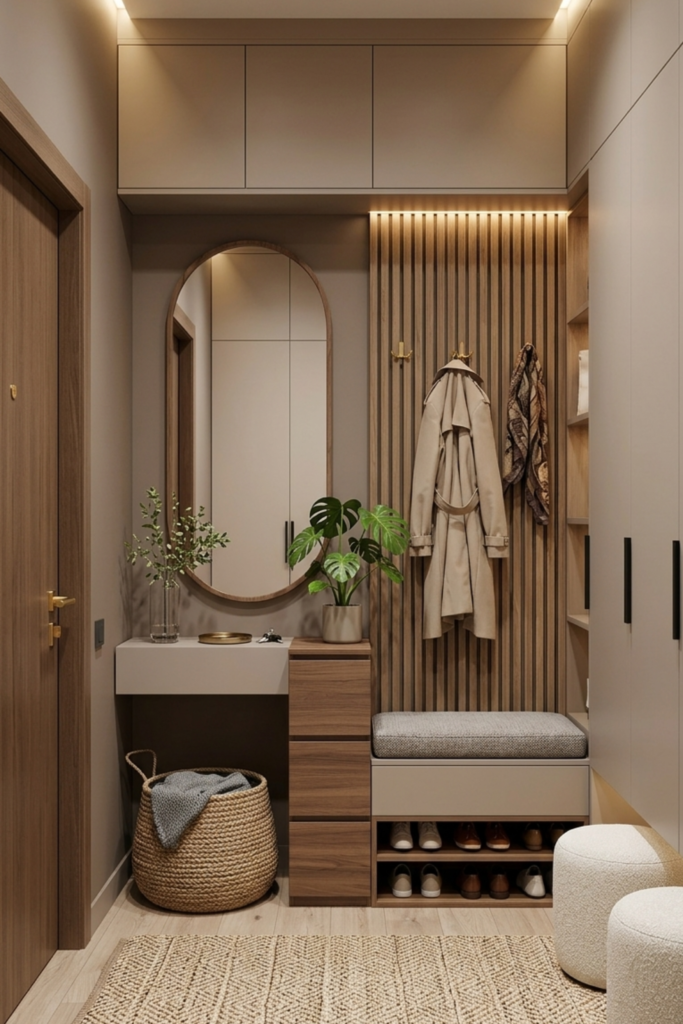
As seen in many high-end modern designs, wood slat panels (also known as acoustic panels) are the “secret sauce.” They add immediate architectural interest and warmth. They also serve a functional purpose: you can easily mount hooks directly onto the slats without damaging your primary walls.
Shop the look:
Click the color selection below to visit Benjamin Moore’s Website and find your most perfect color:

3. The “Drop Zone” Bench
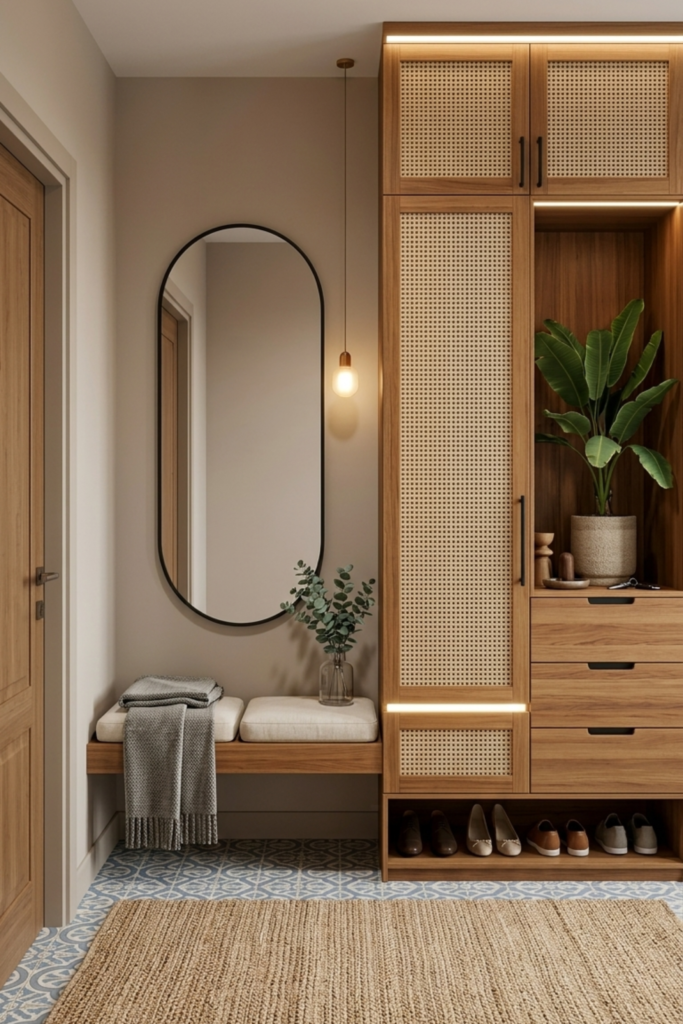
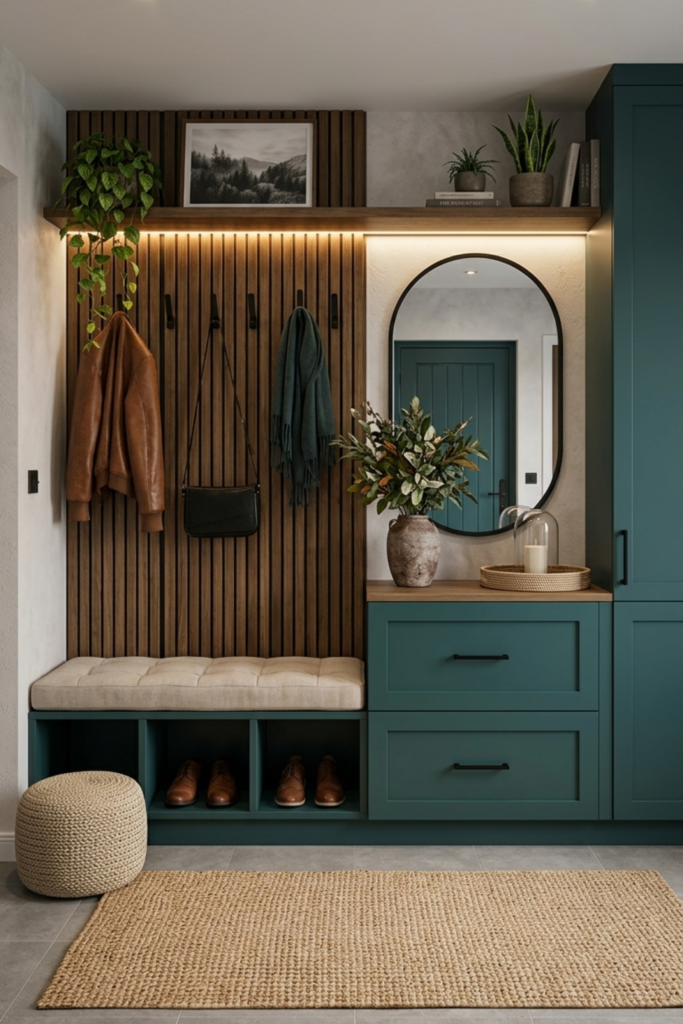
Every functional entryway needs a place to sit. A built-in bench provides a dedicated spot to take off shoes, preventing the “one-legged wobble” near the door. For a high-end look, opt for a upholstered cushion in a performance fabric like linen or bouclé.
IKEA Hack:
Click the color selection below to visit Benjamin Moore’s Website and find your most perfect color:


Shop the look:
Click the color selection below to visit Benjamin Moore’s Website and find your most perfect color:

4. Hidden vs. Open Shoe Storage
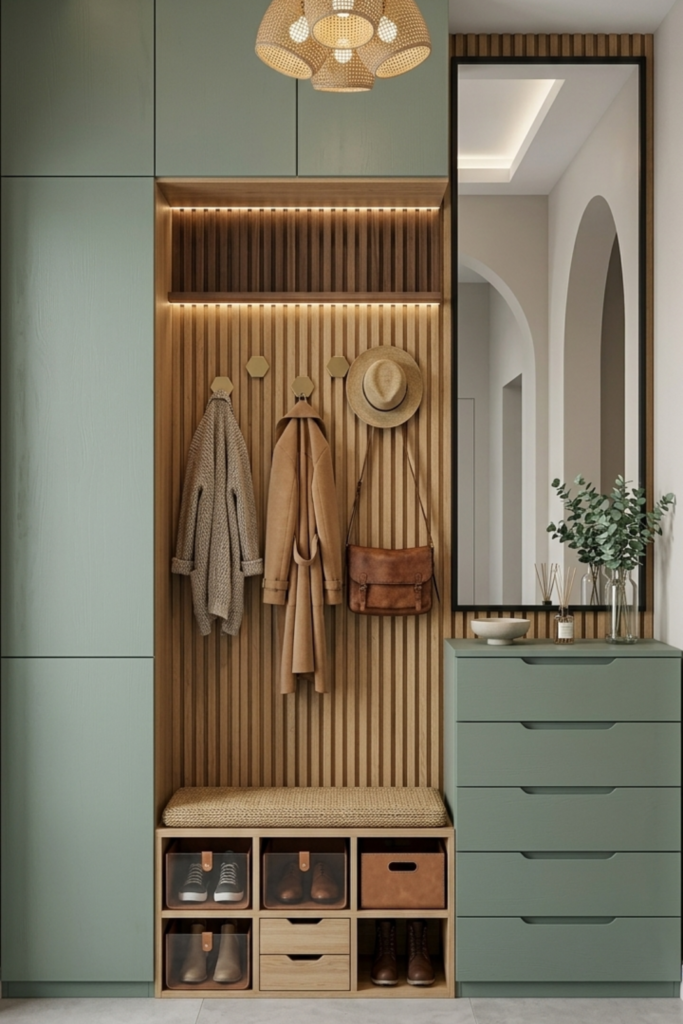
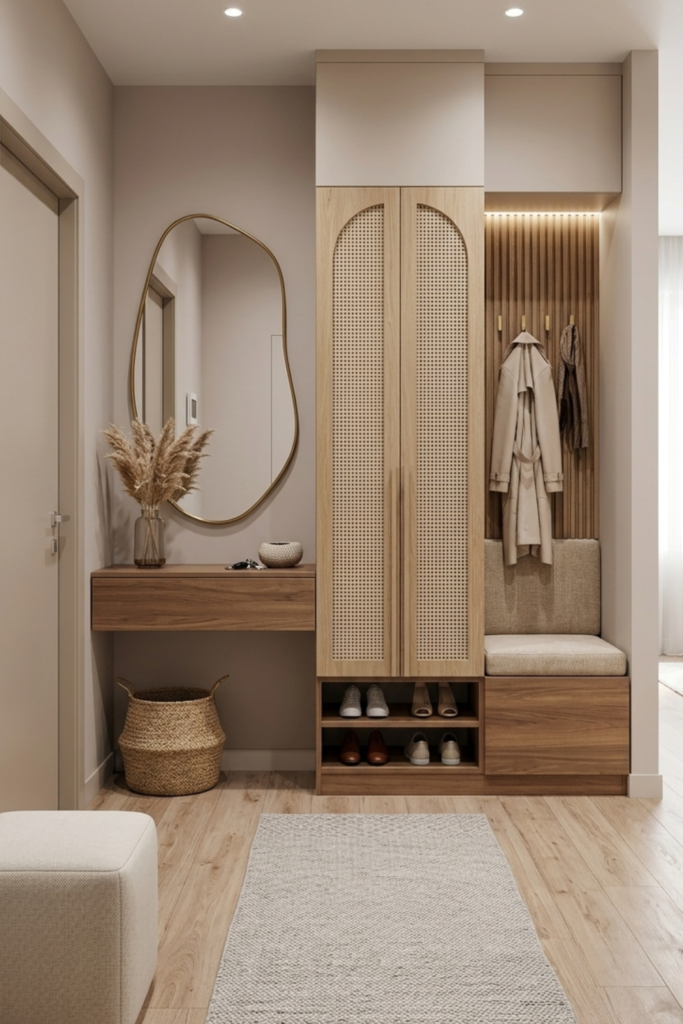
A mix is best! Use open cubbies under your bench for the shoes you wear every single day (it encourages people to actually put them away). For the rest of your collection, use closed drawers or tall cabinets. This keeps the visual “noise” of mismatched shoes hidden from guests.
Click the color selection below to visit Benjamin Moore’s Website and find your most perfect color:
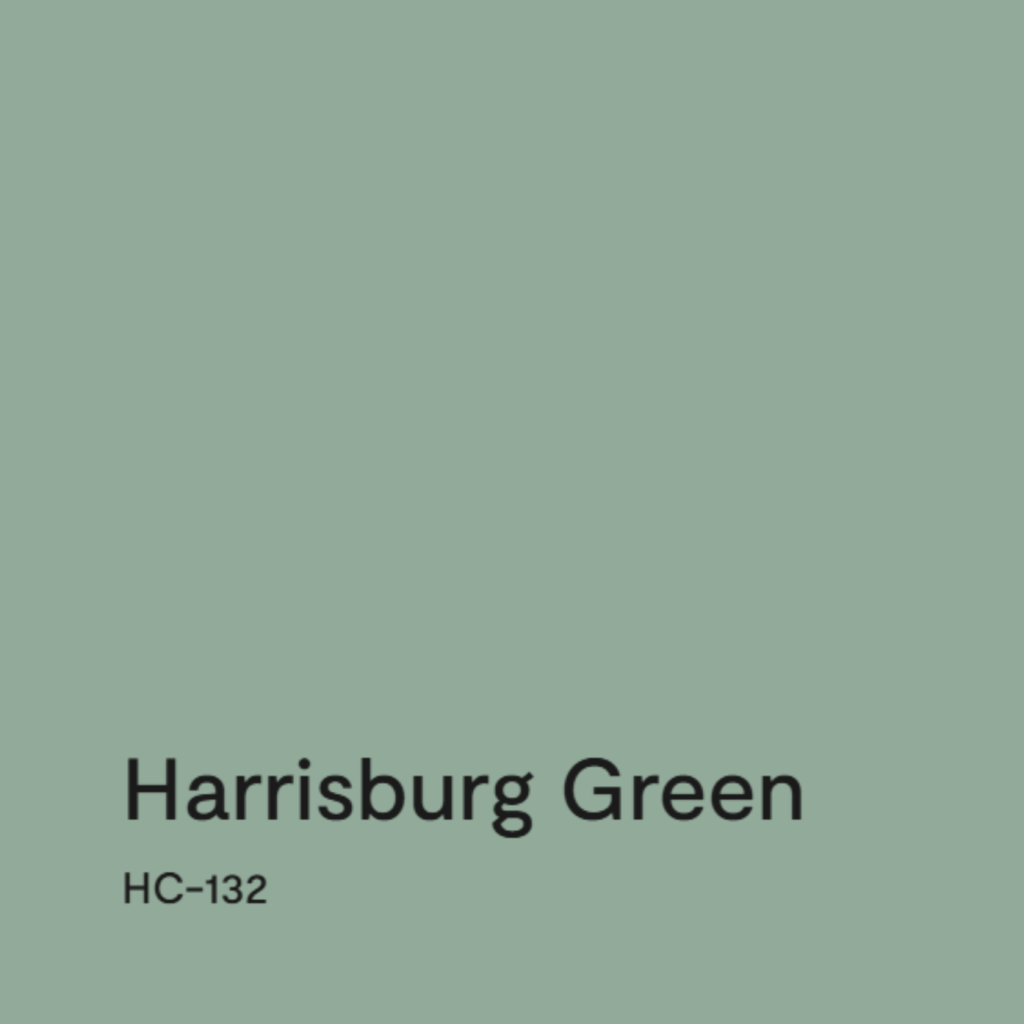
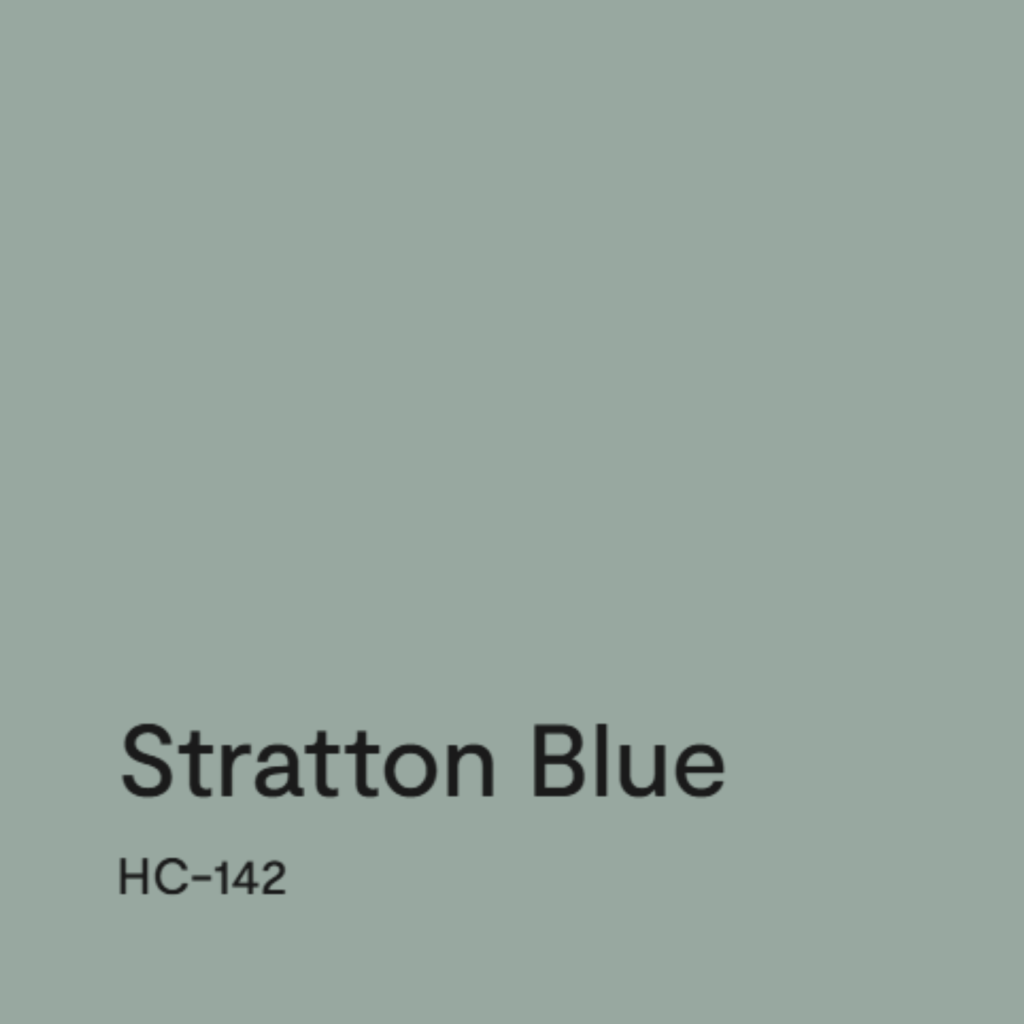
Source: IKEA, Wayfair, Amazon, Benjamin Moore
5. Integrated Lighting is a Game Changer
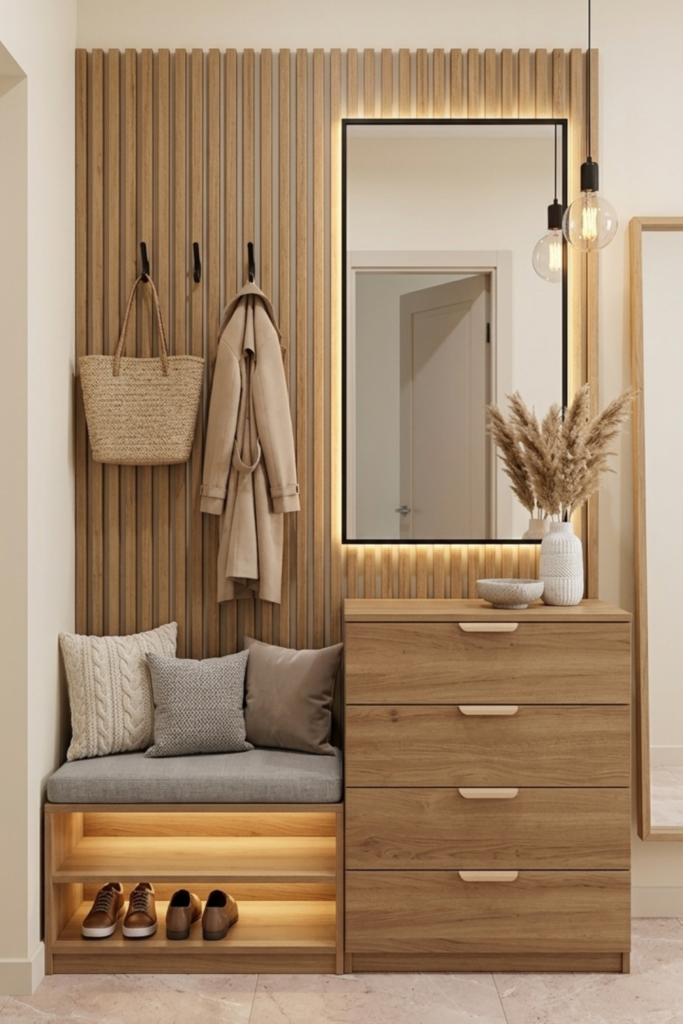
Don’t rely on a single overhead bulb. To make your entry feel like a boutique hotel:
- Add LED strip lights under upper cabinets.
- Use a backlit mirror to create a soft glow.
- Hang a low-profile pendant light to define the space.
PRODUCT RECOMMENDATION COMMING SOON
6. The “Magic” of Oversized Mirrors
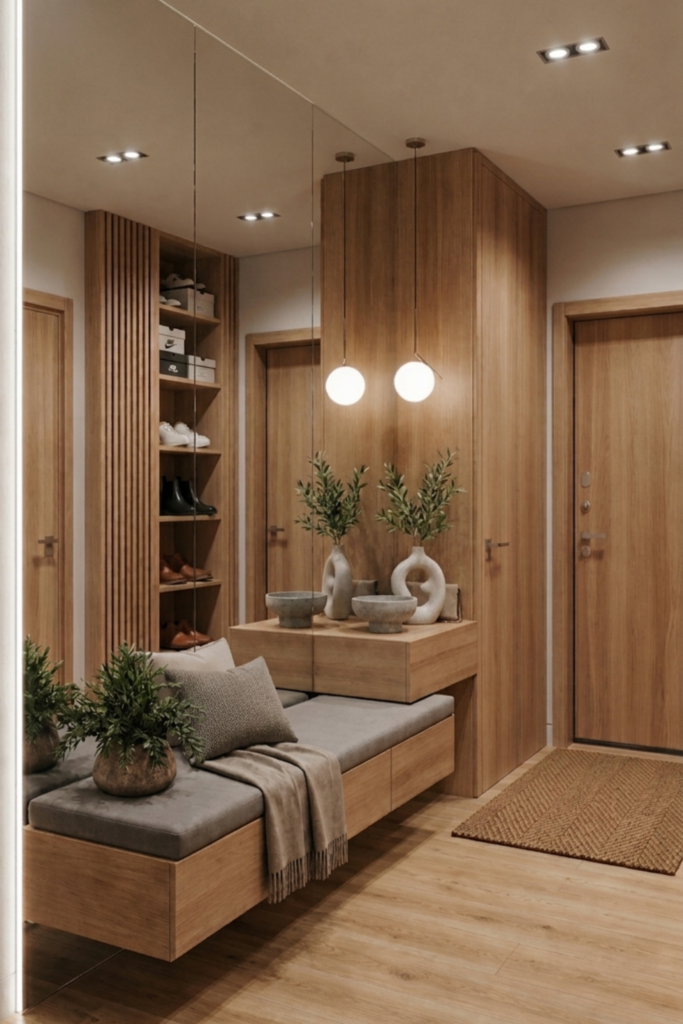
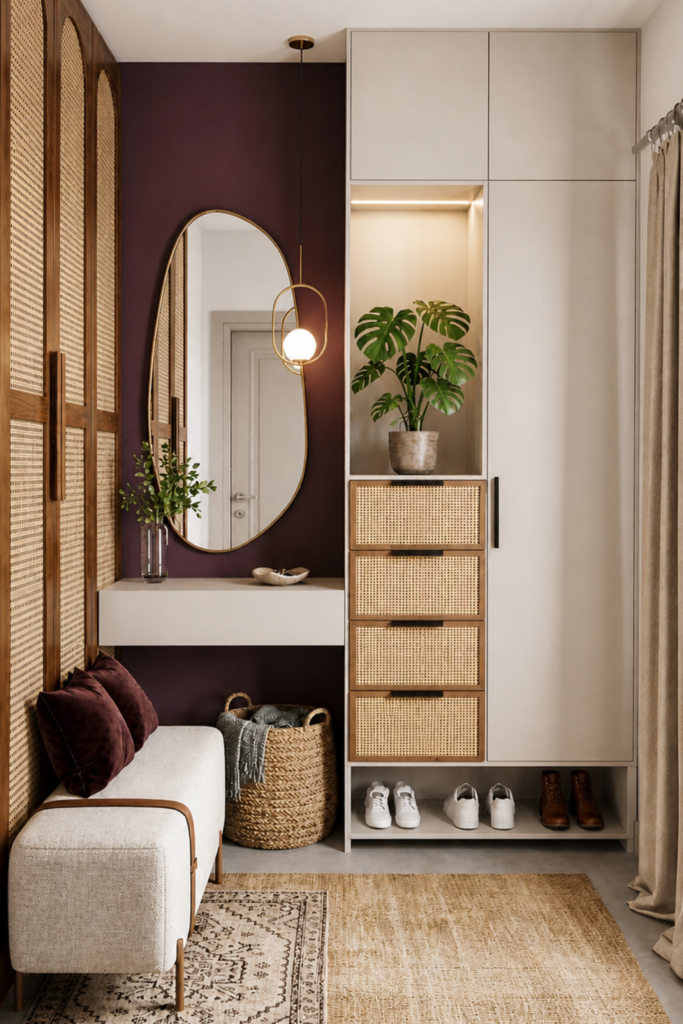
Small entries often feel cramped. A large, circular or asymmetrical mirror serves two purposes: it allows for a quick “outfit check” before leaving and bounces light around to make the hallway feel twice as large.
7. Choosing a “Tension” Color Palette
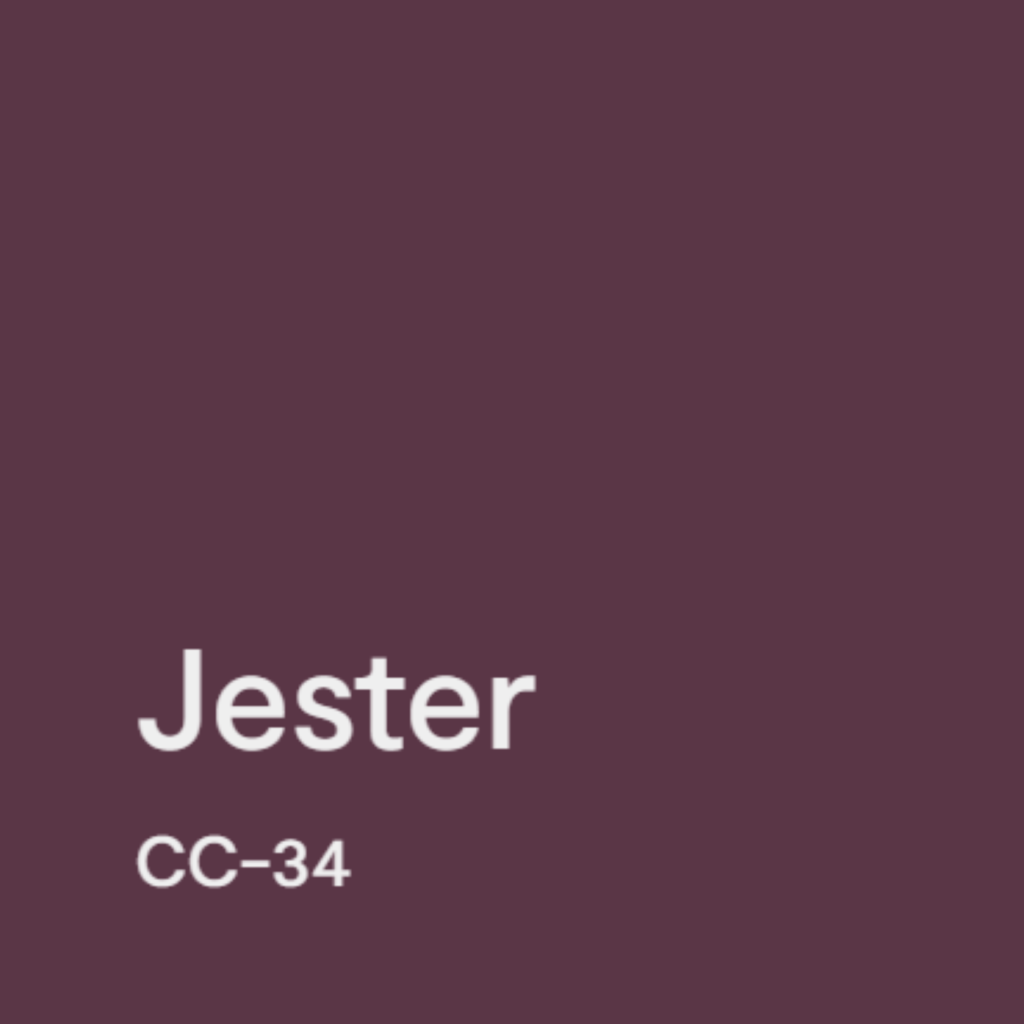
To achieve that trendy look, mix neutral wood tones with one “tension” color. Think deep forest green, muted plum, or matte black. This contrast prevents the space from looking too “cookie-cutter” and gives it a custom, designer feel.
Ikea Hack this look:
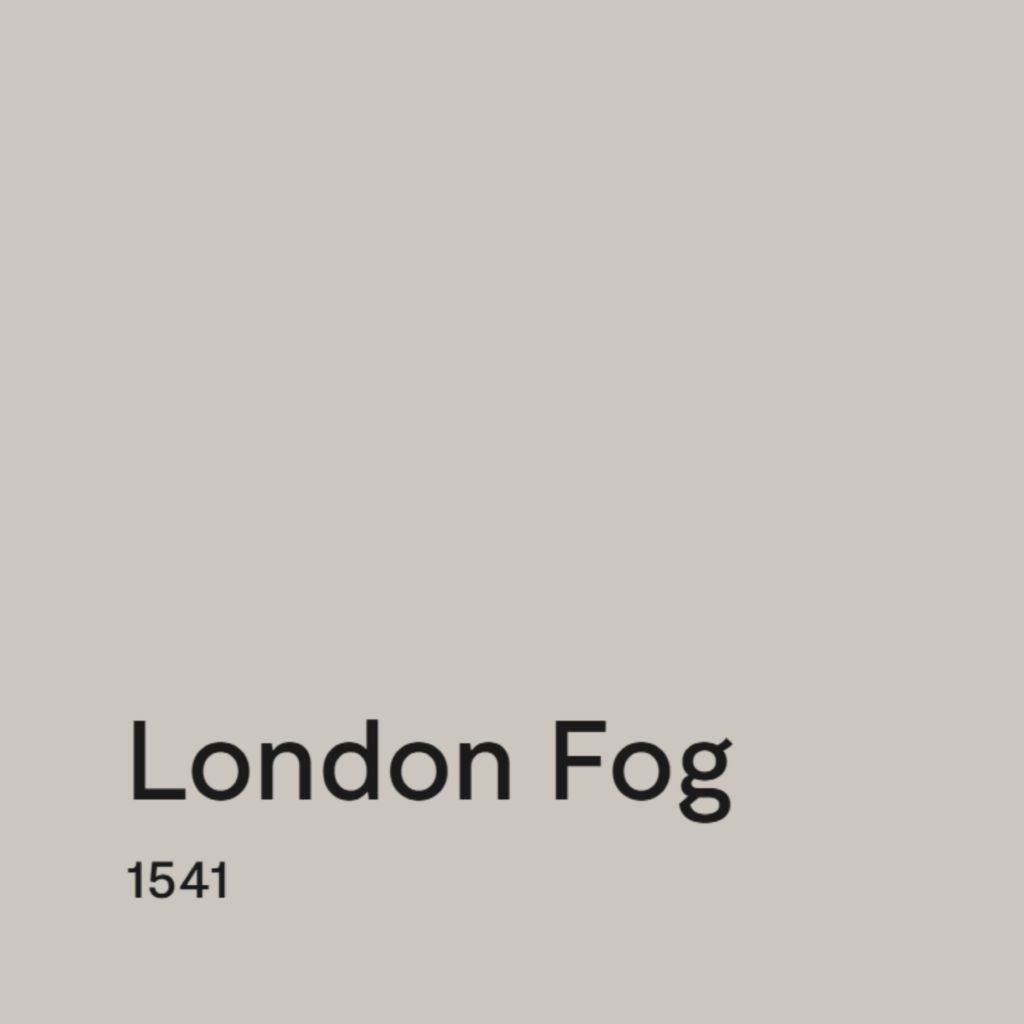
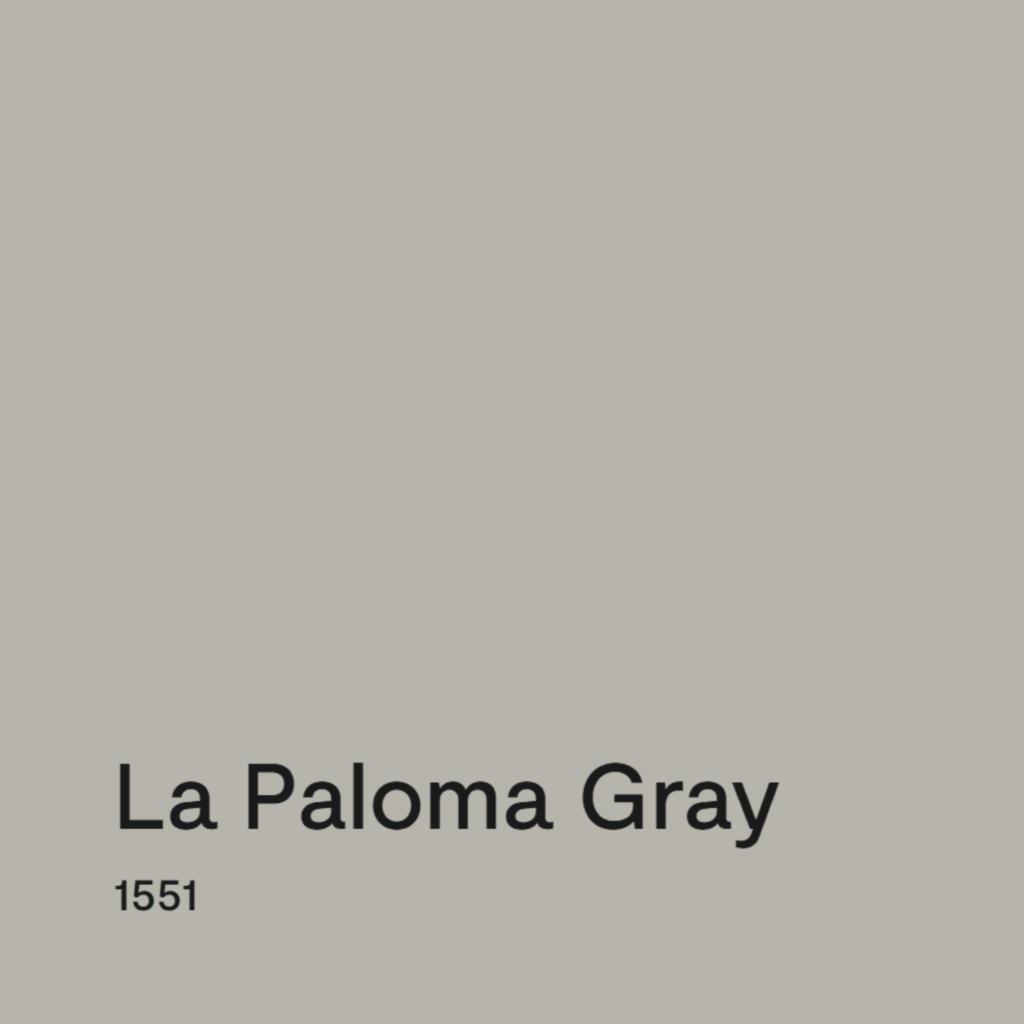
Click the color selection below to visit Benjamin Moore’s Website and find your most perfect color:
8. Command Center Essentials
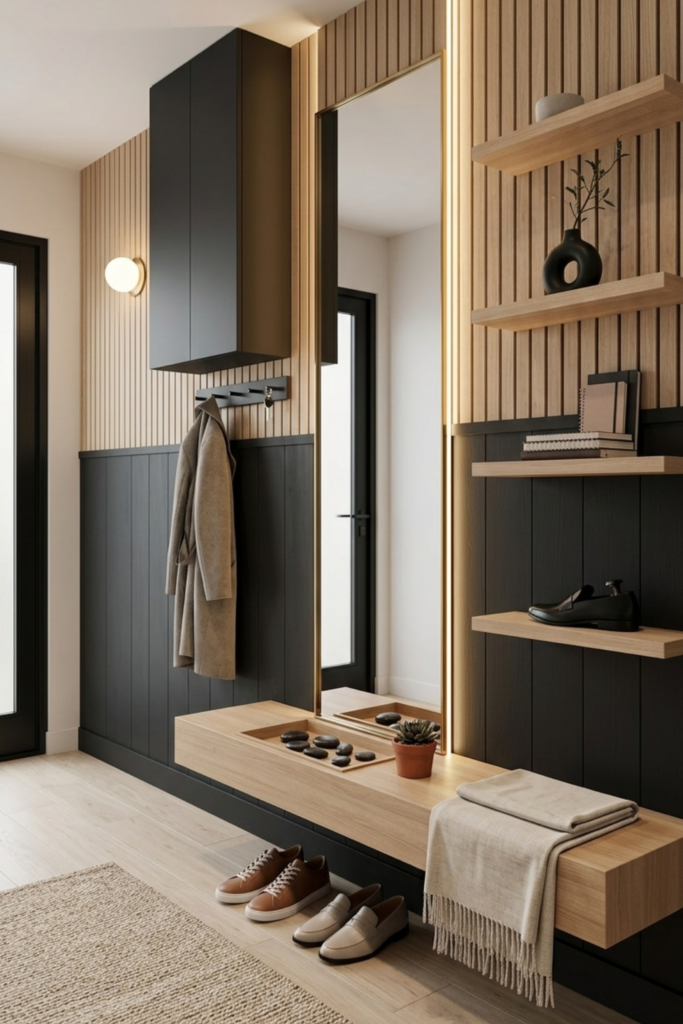
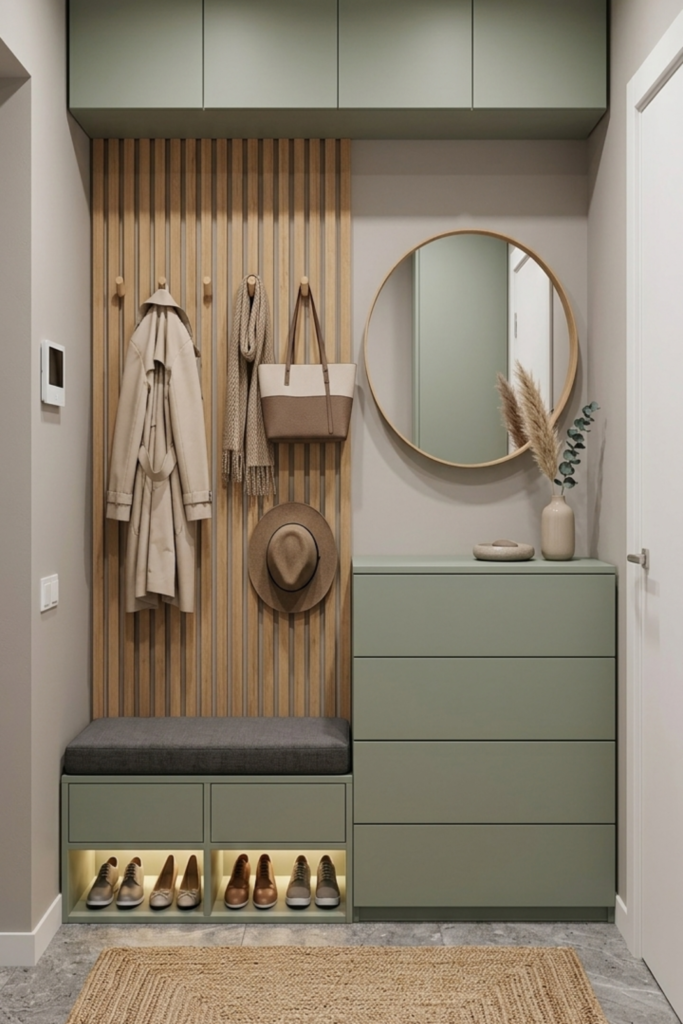
Every entryway needs a “brain.” Dedicate a small surface or a floating drawer as your command center. This is where your keys, sunglasses, and mail live. Use a small decorative tray to keep these items grouped so they don’t migrate across the house.
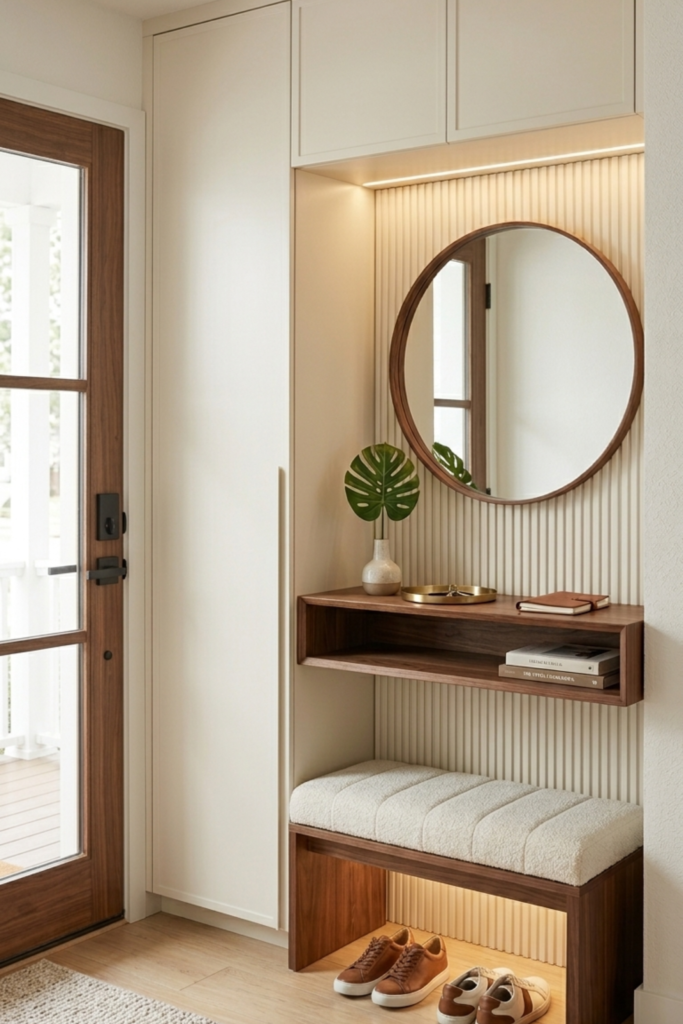
Recreate this look:
9. Natural Elements & Scents
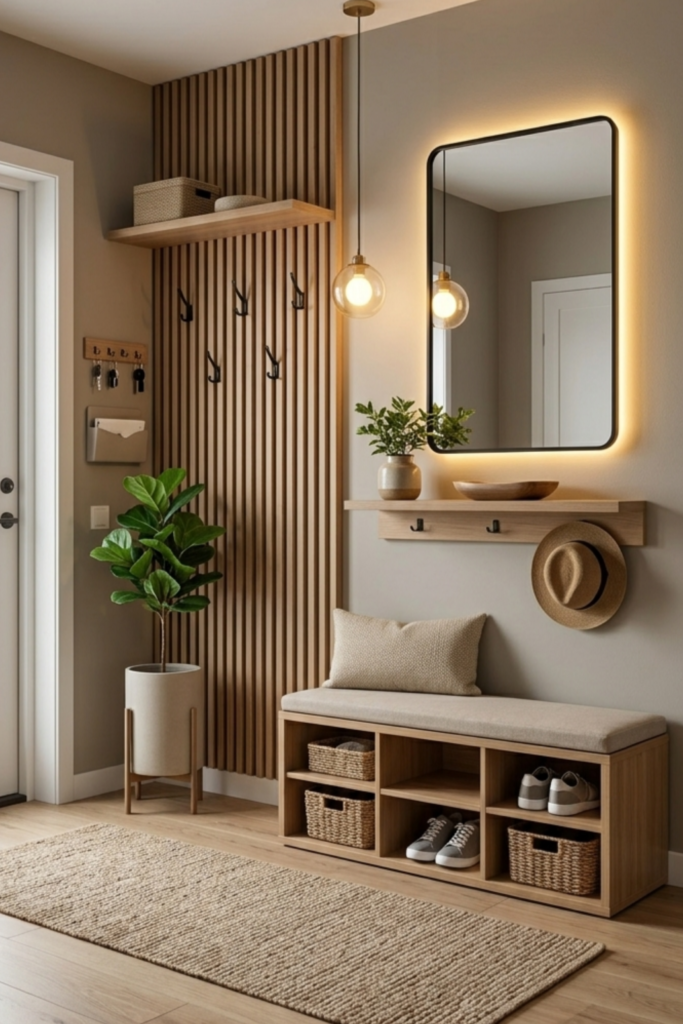
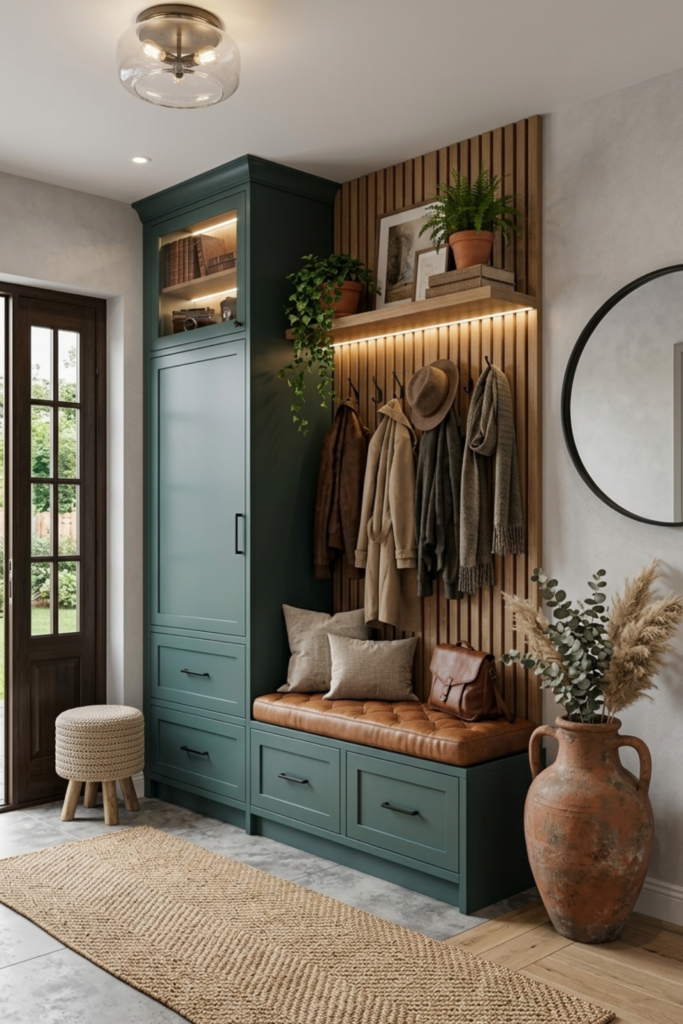
To make the space feel “alive,” add a touch of greenery. A Monstera leaf in a simple vase or a small potted snake plant works wonders. Pair this with a signature home scent—think sandalwood or citrus—to immediately signal to your brain that “you are home.”
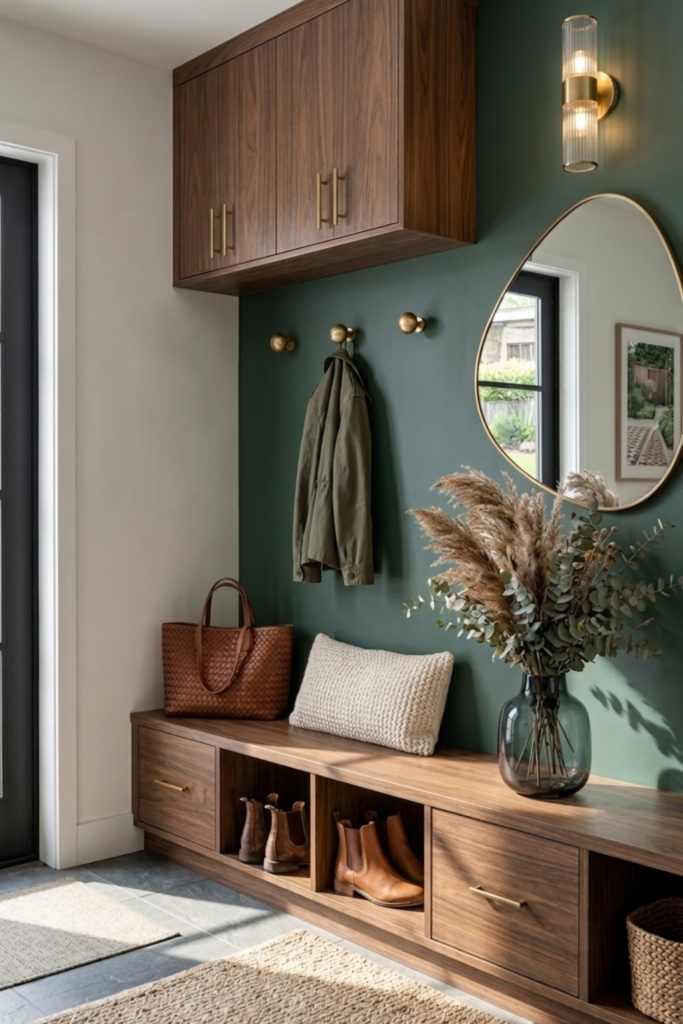
How to recreate this look with IKEA Cabinets:
Click the color selection below to visit Benjamin Moore’s Website and find your most perfect color:

10. The Rug: Durability Meets Style
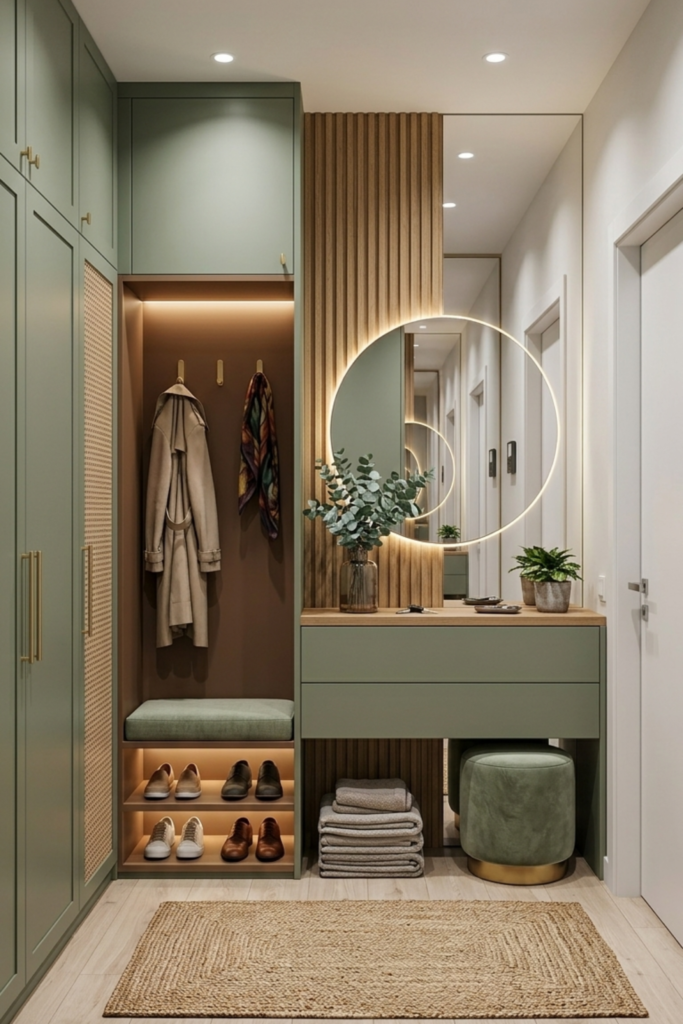
Finally, anchor the space with a rug. For an entryway, a jute runner or a low-pile washable rug is essential. It catches dirt before it hits your main floors and adds a layer of texture that ties the wood tones and cabinetry together.
The Solution to Your Entryway Chaos
By combining custom-look cabinetry with tactile textures (slats and jute), you solve the problem of “where does it all go?” while creating a beautiful first impression. Most of these elements—like the slat panels and floating benches—can be recreated using standard IKEA hacks or simple DIY kits!
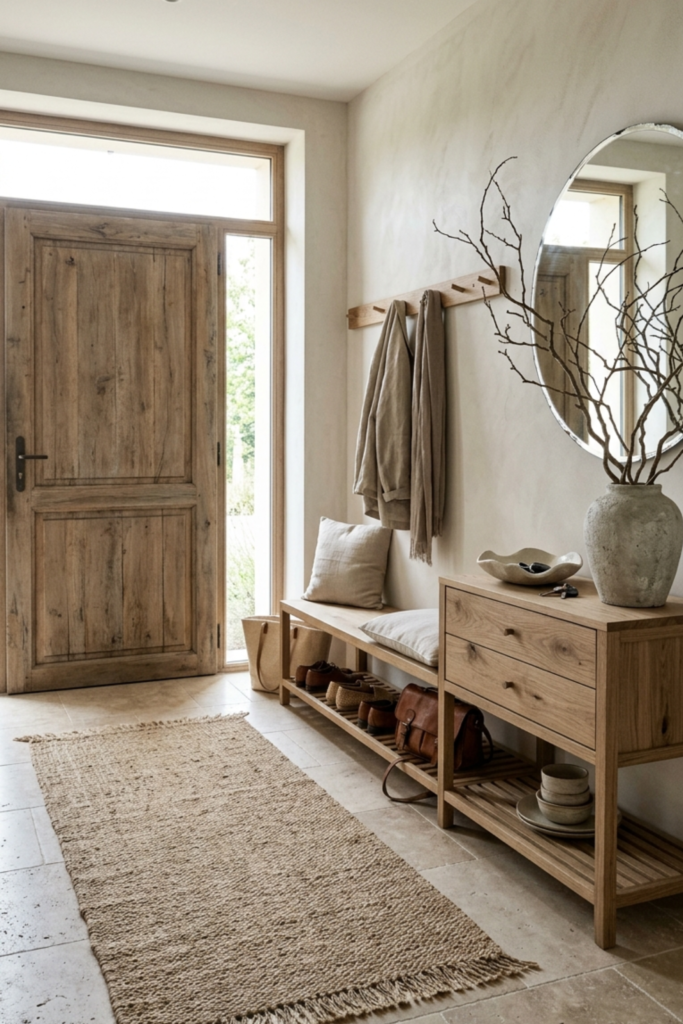
What Most Entryways Are Missing(And How to Fix It):
Most entryways suffer from “forgotten corner syndrome”—they are treated as simple thoroughfares rather than purposeful spaces. If yours feels chaotic or uninviting, it is likely missing one of these three “Genius Upgrades.”
1. The “Drop Zone” Anchoring Tray
Most people leave keys, mail, and sunglasses scattered across surfaces, creating visual clutter.
- The Upgrade: Add a dedicated decorative tray or a small bowl on your console or dresser. By giving small items a “home,” you stop the clutter from spreading. It’s the easiest way to regain control of your surfaces in seconds.
2. The “Layered Lighting” Secret
Most entryways rely on a single, harsh overhead light. This kills the mood the moment you walk through the door.
- The Upgrade: Integrate warm accent lighting. Whether it’s an LED strip under your bench (like in the photo), a small table lamp on your console, or backlit mirrors, adding a secondary, lower-level light source instantly turns a cold hallway into a welcoming, high-end space.
3. Vertical Zoning
We often forget to use the wall space effectively, leaving the entryway feeling unbalanced.
- The Upgrade: Use vertical wall treatments (like wood slat panels or bold wallpaper) behind your coat hooks. This “zones” the area, visually separating the “mudroom” function from the rest of your home. It creates an architectural statement that makes the entryway feel like an intentional room rather than just a wall with hooks.
Disclosure & Disclaimer
Inspiration & Images: The visual inspirations in this article are original AI-generated designs created specifically for this blog to illustrate the Aesthetic. These images are for inspirational purposes only and do not represent existing commercial spaces.
Product Recommendations: All product links and recommendations are curated by me as a Home Stylist. They reflect my personal research and design vision. I am not currently affiliated with the brands mentioned and do not earn any commissions from these links. My goal is simply to help you find the right pieces for your space.
Results & Accuracy: While I strive to provide the best advice, DIY results may vary depending on your space and lighting. I always recommend testing samples or checking product dimensions (such as rug sizes) in your own home before purchasing.